


A resume bullet without numbers is like a pull request without a diff. It hints at work, but it doesn’t show what changed.
In 2026, hiring teams want proof of scale, speed, reliability, and ownership. Strong quantifiable highlights turn code into results a recruiter can grasp in seconds. These metrics define your work experience. While contact information is essential, it is the bullets that win the interview. Start there, and the rest of your resume gets easier to fix for hiring managers and recruiters.
What hiring teams want from achievement statements in 2026
Hiring managers rarely read every line on the first pass. Instead, they scan work experience and personal projects for signals. Did you improve performance? Reduce cost? Handle real traffic? Own decisions, not only tickets?
Hiring managers want clear career progression through these signals.
That shift is getting sharper. Recent 2026 resume shifts for software engineers show that teams now value AI-assisted delivery, system thinking, and code review judgment, not only raw output. At the same time, an ATS-optimized software engineer resume example highlights three signals recruiters keep chasing: scale, ownership, and measurable impact.
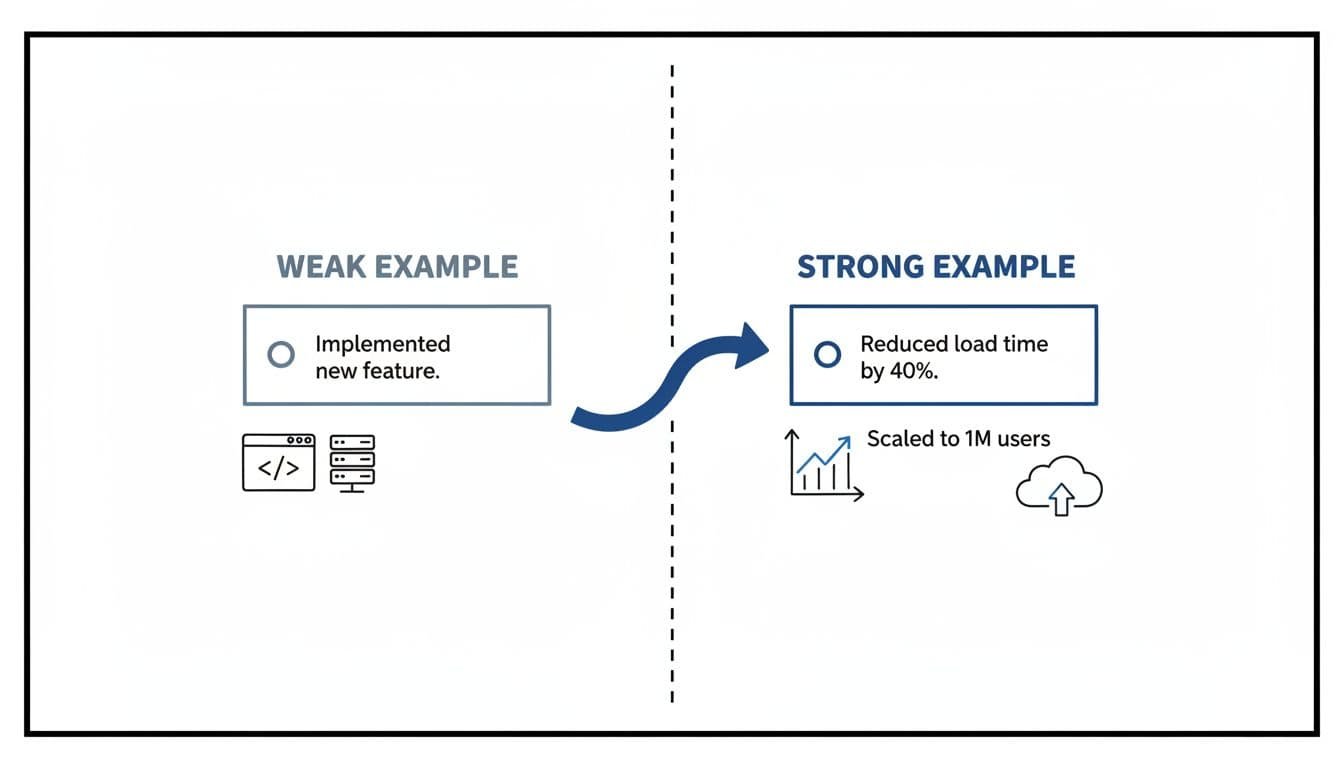
So, don’t write achievement statements like a job description. “Worked on microservices” says little. “Refactored payment microservices, cutting checkout failures 28%” says a lot. Hiring managers scan the work experience section for achievement statements packed with action verbs and quantifiable results that demonstrate impact and value.
The best achievement statements for developers usually answer four quiet questions:
- What changed?
- How much did it change?
- Where did it happen?
- What tools or systems were involved?
If your achievement statement can fit almost any engineer, it’s too broad. Good achievement statements feel concrete. They sound like evidence, not duties. They align with the job description and showcase your career progression.
How to write impactful descriptions with metrics
Use the simple Laszlo Bock formula: action + scope + tools + result. To display technical skills, focus on specific technologies and programming languages in the tools section.
That formula keeps your bullet tight. It also gives recruiters what they need fast. If you want more examples of this style, these achievement-driven bullet point frameworks show why result-first writing works well for engineering resumes.
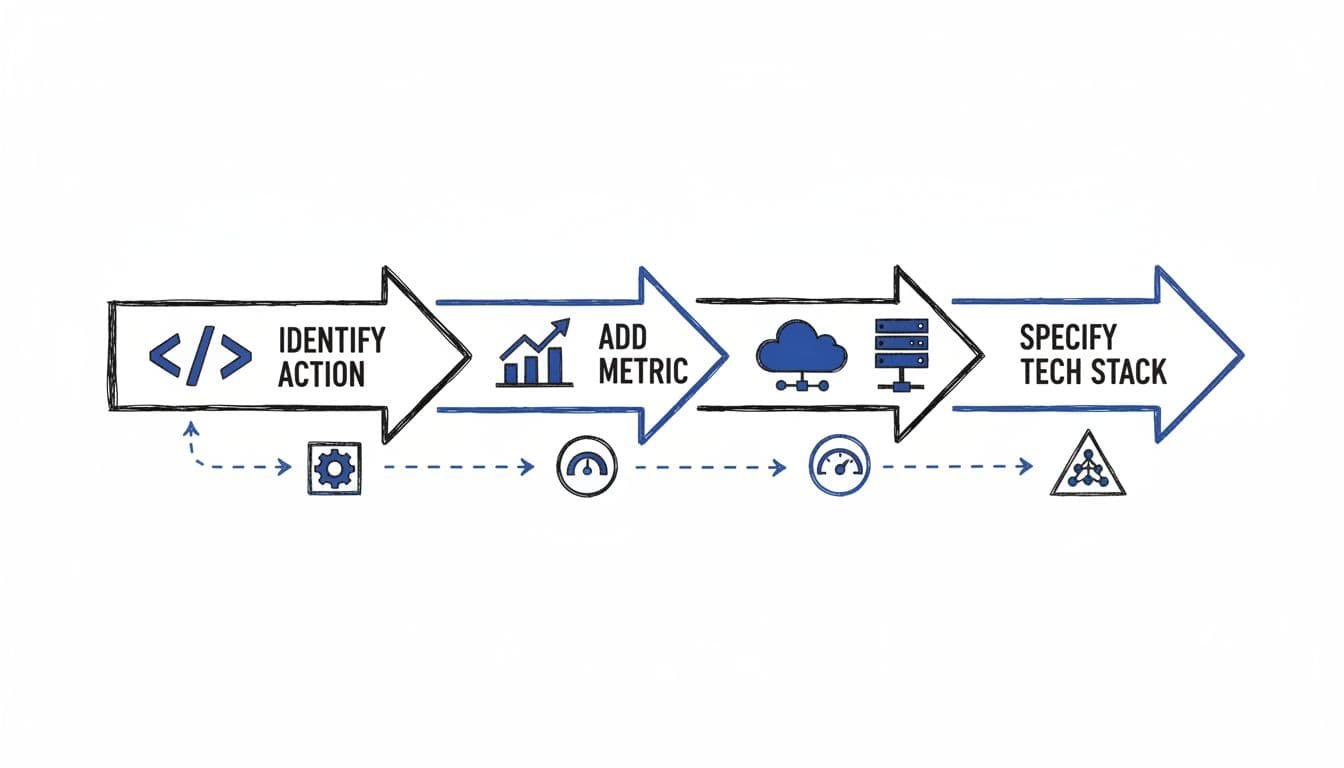
Most metrics already exist in your work. Hiring managers and recruiters scan dashboards, sprint notes, cloud billing, incident reports, test runs, or product analytics. Good software engineer resume metrics often come from page speed, API latency, uptime, ticket volume, cloud spend, release time, conversion, retention, or bug counts.
Here’s the difference in practice. “Built internal tools” is weak because it hides the point. “Built an internal deployment tool in Python, cutting release prep from 45 minutes to 10” tells a clear story.
The same rule works for junior engineers. You don’t need a million-user system to show value. Use active language in the work experience section to describe a software engineering internship or open source contributions. A strong entry-level bullet can mention test coverage, bug fixes, build time, feature adoption, or support ticket drops.
Write like you’re showing the before and after. Numbers give your work shape.
Quantifiable examples for your technical experience
Use these as models, not lines to copy. Swap in your programming languages, specific technologies, scale, and results. Hiring managers and recruiters look for quantifiable results in your professional experience and employment history.
Backend and platform examples for your professional experience
Highlight the programming languages and specific technologies you worked with:
- Re-architected a Go-based checkout API, reducing p95 latency 42% and supporting 3.2M daily requests.
- Added Redis caching and query tuning to a Python service, cutting response time from 1.8s to 640ms.
- Built Kafka retry handling for order events, lowering failed writes 68% and reducing manual recovery time by 32 minutes.
Front-end and product examples
Incorporate programming languages like React and Next.js into your professional experience:
- Rebuilt a React dashboard with code splitting, improving load time 38% and raising trial conversion 14%.
- Shipped an A/B-tested onboarding flow in Next.js, lifting user activation 18% across 42,000 monthly signups.
- Wrote Playwright tests for core user paths, cutting escaped UI defects 37% over three releases.
DevOps, security, and reliability examples for your employment history
- Automated CI checks and parallel test jobs in GitHub Actions, reducing deploy time from 26 minutes to 9.
- Led a Kubernetes migration for 14 services, increasing release frequency from weekly to daily while holding 99.95% uptime.
- Added secret rotation and static analysis checks, reducing high-severity security findings 61% in two quarters.
Leadership and cross-team examples in your employment history
- Mentored five engineers on code review standards, reducing pull request turnaround 33% and reopen rate 22%.
- Partnered with product and data teams to rank performance fixes, helping raise paid retention 9% in six months.
- Owned incident follow-ups for a payments service, cutting repeat Sev-2 issues 44% after new alert rules and runbooks.
These examples work because they connect the work to a result that impresses hiring managers and recruiters. That’s the heart of strong technical achievement samples.
ATS resume tips so your metrics survive the upload
Even the best bullets fail if the ATS scrambles them or ignores keyword filters. So keep the layout plain for a one-page resume. Use a standard resume template with one column, standard headings, clean dates, and simple bullets. Start with clear contact information at the top, then tailor resume sections like the summary section, education section (highlight relevant coursework and proficient languages to secure a phone interview), and work experience. If you want a model, this Lever-compatible resume layout shows what usually parses well as a standard resume template, and this Recruitee copy-paste test is a fast way to catch broken formatting for your one-page resume.
CareerScribeAI fits well here because the AI Resume Builder can turn rough task notes into sharper, quantified bullets without turning the page into a design project, making it easier to tailor resume content for personal projects too. After that, the Cover Letter Generator can echo the same wins, and Interview Prep Tools can help you turn those bullets into short stories for interviews and that first phone interview.
Keep each bullet readable in plain text. That’s one of the best ATS resume tips you can follow in 2026.
Numbers give your resume proof. That’s what hiring teams remember. Focus on impact and value in the work experience and personal projects sections; that’s what a hiring manager or recruiter ultimately remembers when scanning your education section achievements.
Pick three old bullets today and rewrite them with action, scope, tools, and a result. If a recruiter or hiring manager skimmed only those three lines, would they see impact or only activity?