
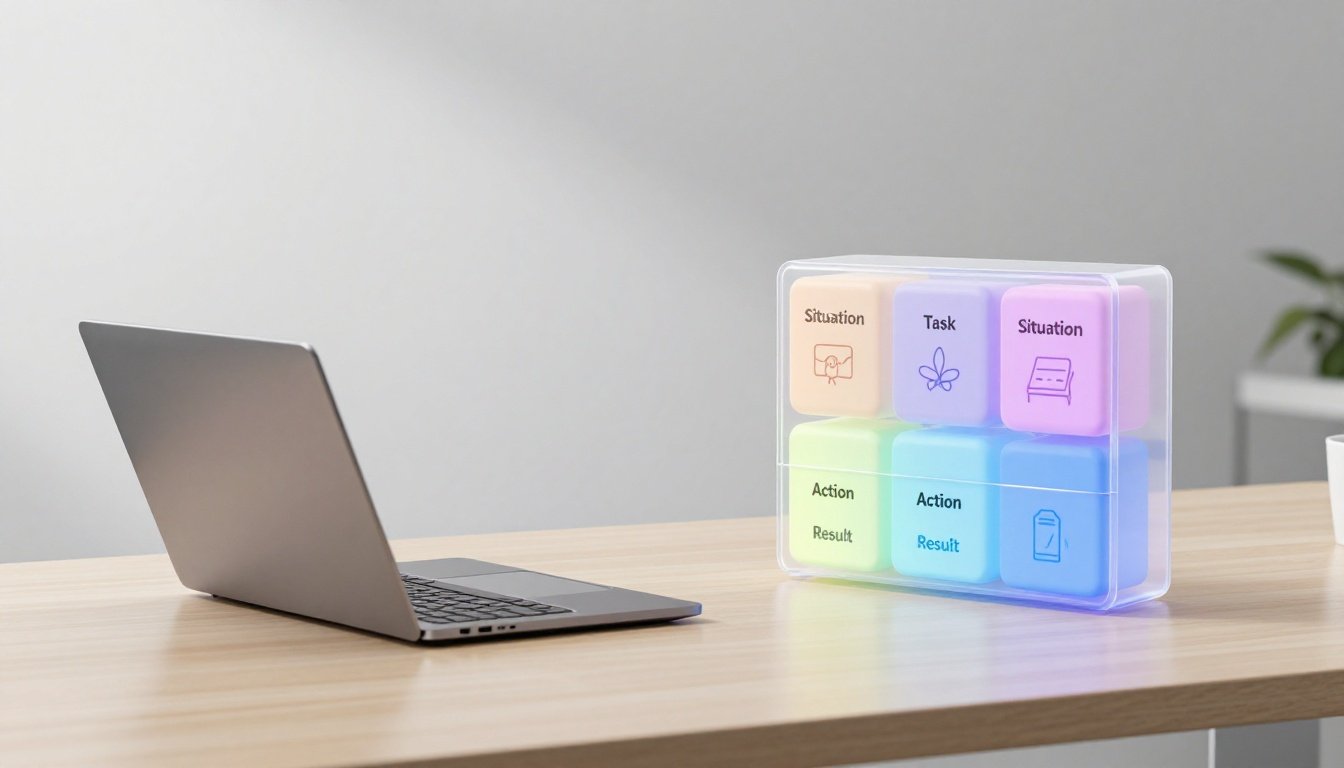
Blanking on “Tell me about a time…” usually isn’t a confidence problem. It’s a storage problem.
A good STAR story bank template gives your best work a place to live before the interview starts. This storage system streamlines interview preparation, so instead of digging through memory under pressure, you pull a story off the shelf, trim it to fit the question, and speak with proof.
That shift matters because behavioral interviews reward recall, not improvisation. Start with a bank that makes your professional experience easy to find and boosts candidate readiness.
Why a STAR story bank beats last-minute prep
The STAR method works because it keeps your answer easy to follow. It follows the Situation Task Action Result structure to set the context, explain the task, show the action you took, and end with the result. Hiring teams like it because it sounds like evidence, not opinion. MIT CAPD’s STAR worksheet for behavioral interviews shows the same idea in a simple format.
A story bank takes that structure one step earlier. Instead of waiting for the question, you prepare 8 to 10 flexible stories in advance for behavioral interview questions. Then you tag each one by skill, such as teamwork, conflict, leadership, ownership, customer service, or problem-solving.
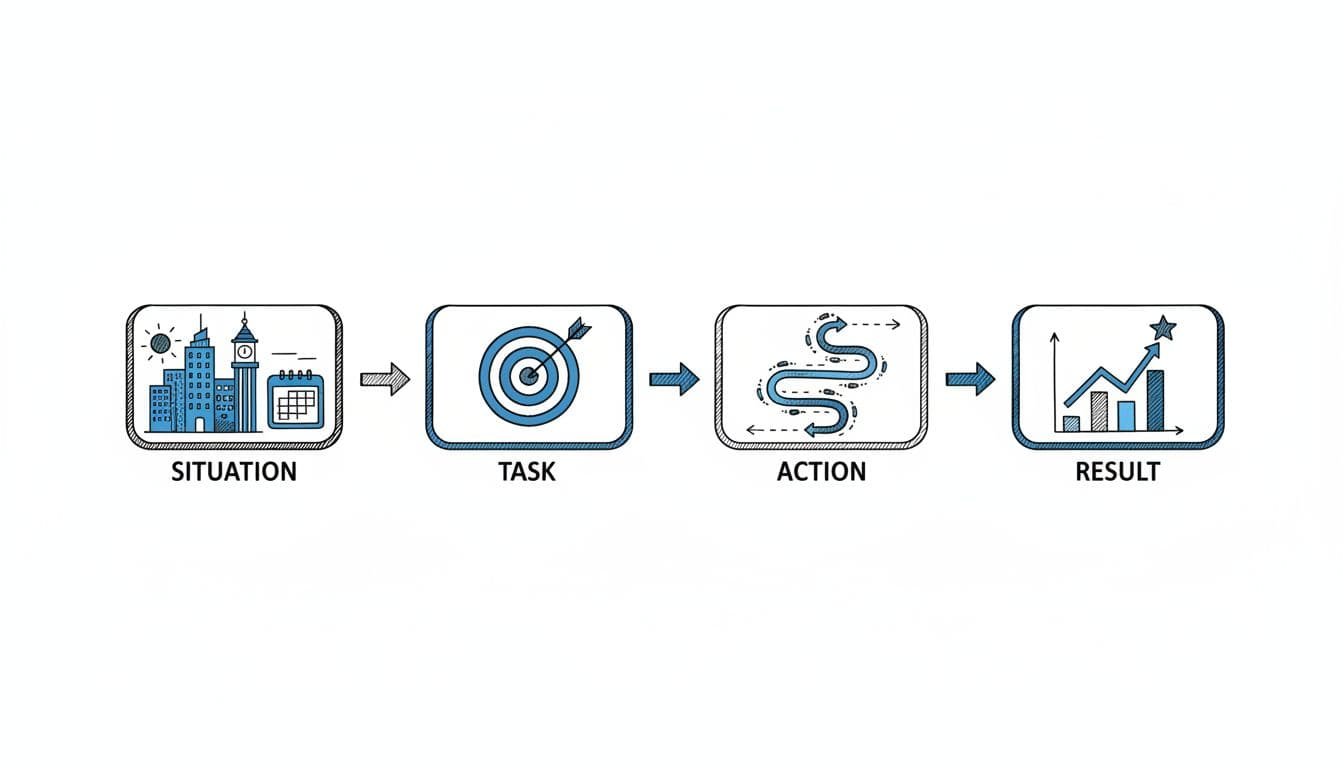
That system saves time, and it makes job interview preparation less chaotic. One story about fixing a broken onboarding flow might answer questions about initiative, collaboration, pressure, or influence. As a result, you stop memorizing dozens of separate answers.
A story bank is private prep, not a script to recite.
Keep each story short enough to tell in 60 to 90 seconds. For timing tips, sample lengths, STAR technique details, and mock interview practice, this STAR method complete guide is a useful reference. If you want extra structure, CareerScribeAI’s Interview Prep Tools can help you match likely questions to the right stories before the interview.
Your 2026 STAR story bank template
Treat your story bank like a career filing cabinet. Each row should hold one story, one skill, and one clear result. That way, when an interviewer asks about a challenge, you don’t reach for a vague memory. You reach for a labeled file.
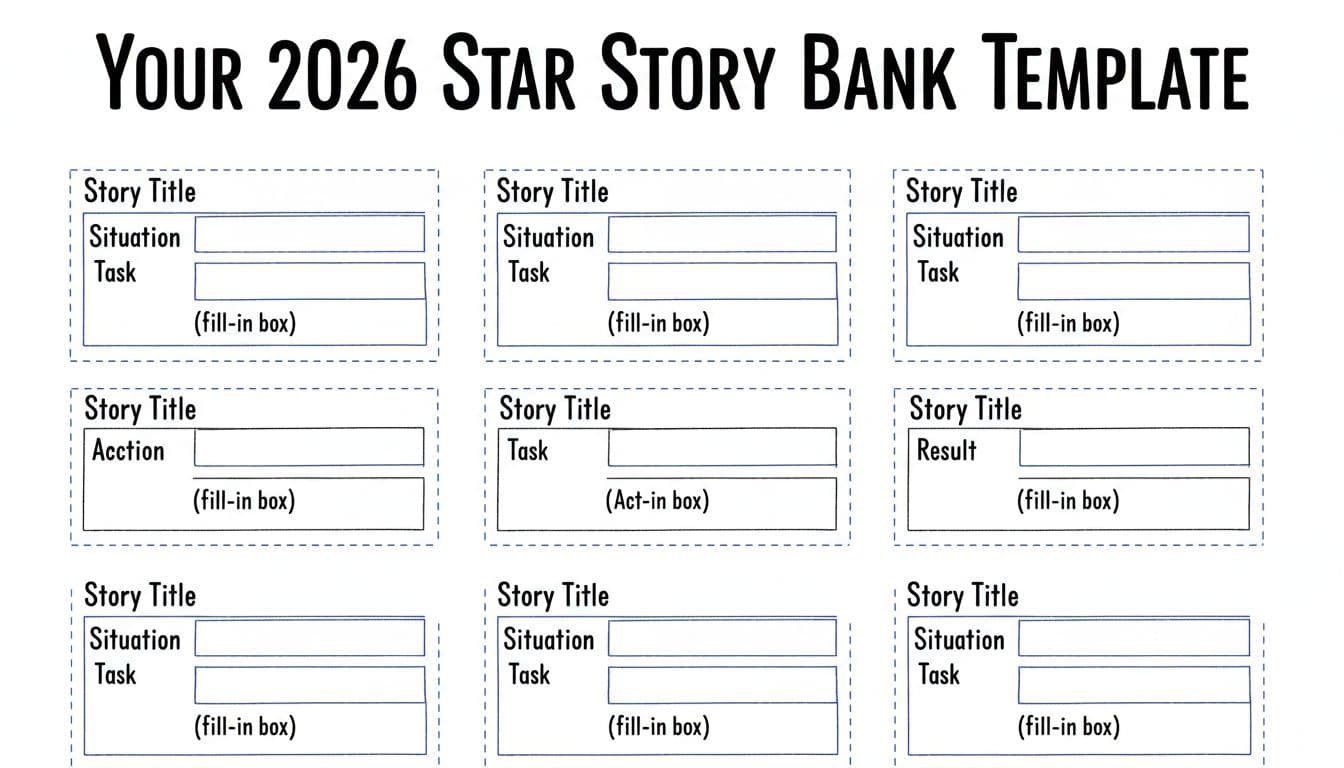
Use one entry per story, structured around the Situation Task Action Result framework:
| Field | Fill-in prompt |
|---|---|
| Story title | What happened, in 3 to 5 words? |
| Skill tag | What core competencies and transferable skills does this prove? |
| Situation | What was going on, and why did it matter? |
| Task | What were you responsible for? |
| Action | What did you do, step by step? |
| Result | What changed, improved, saved, or reduced? |
| Proof | What metric, feedback, or artifact backs it up? |
The best entries feel plain on the page. That’s fine. Your notes are supposed to be raw material. Keep the Situation short. Spend most of your space on Action. Then end with a Result that delivers quantifiable results and career accomplishments. A number is great, but it isn’t the only option. You can name time saved, errors reduced, customer feedback, smoother handoffs, or a faster process.
Most job seekers do well with 8 to 10 stories. Cover wins, mistakes, conflict, teamwork, pressure, leadership, and learning. Also add one story that shows recovery after a setback, because failure questions often catch people off guard.
If a story feels weak, ask sharper prompts: What tension made this hard? What choice did you make? What would have happened if you did nothing? Those questions add stakes, and stakes make interview stories memorable.
How to use your bank in real interviews
A strong story bank is flexible. You don’t need one perfect answer for every question. Instead, you need a handful of stories that can bend without breaking.
For example, imagine you improved a handoff between sales and support. If the interviewer asks about teamwork, focus on cross-team trust. If they ask about conflict, explain the friction you resolved. If they ask about process improvement, spotlight the fix and the result. That’s why strong STAR examples feel reusable, almost like a multi-tool instead of a single-purpose key. In behavioral interviewing, employers rely on past behavior because it delivers strong predictive validity in structured interview processes.
Write two or three question tags under each story. Common tags include leadership skills, team collaboration, problem solving, measurable impact, and outcome focus. These sample response tags make retrieval faster when the interviewer changes the wording. For more practice sets, this guide to behavioral interview questions can help you test whether your story bank covers the usual themes.
Your story bank should also line up with the job description, your resume, and cover letter. If your resume claims ownership, your interview stories should prove ownership. CareerScribeAI can help connect those dots. Its AI Resume Builder turns wins into tighter bullets, the Cover Letter Generator keeps your themes consistent, and the Interview Prep Tools help you rehearse likely behavioral interview questions, handle follow-up questions, and align with interview scorecards through competency mapping, all with the same evidence base.
That alignment matters before the interview too. If you need cleaner formatting for ATS-heavy applications, this one-column template for Lever ATS and this Recruitee copy-paste resume test guide can help your resume stay readable.
When your mind goes blank in an interview, the problem usually isn’t experience. It’s retrieval.
A solid STAR story bank template fixes that by turning scattered memories into ready proof. Open a doc, add your first five stories today, and tag each one by skill. Your next answer should feel like recall, not rescue.