


A potential employer may be able to contact your current boss without permission, depending on the jurisdiction and circumstances. There’s no universal rule that makes every unauthorized call from a prospective employer illegal, so confidentiality needs an explicit boundary.
If you’re employed, you can request that recruiters delay contacting your current employer and offer alternative references. Start by separating legal requirements from hiring practices.
Key Takeaways
- Direct calls about a candidate and third-party background reports can have different consent requirements.
- “Not at this time” is a reasonable response when your job search is confidential.
- Put restrictions in writing and offer other suitable contacts or an agreed contact stage.
Permission Rules Depend on Location and Screening Method
In the United States, the type of check matters
There’s no general U.S. federal rule requiring permission before every direct call. State or local laws, contracts, and employer policies may impose additional restrictions.
However, when an employer obtains a consumer background report through a reporting company, the Fair Credit Reporting Act generally requires disclosure and written authorization. That process differs from a hiring manager calling your supervisor directly.
Read authorization language before signing. Permission for screening may be broader than the list of people you supplied.
Canadian privacy rules require separate consideration
Canadian requirements depend on the province, sector, and information involved. A rule applicable to one employer doesn’t automatically apply to another.
Ogletree’s Canadian background-check guidance recommends obtaining written consent before screening and explains that certain checks require it.
Regardless of location, permission to verify dates with a former employer is distinct from permission to discuss performance with your current manager.
Why Recruiters Ask to Contact Your Current Employer
Recruiters mainly want to confirm your job titles, employment dates, and principal duties. Hiring managers may also ask about your performance, reliability, and professional demeanor.
Some prefer supervisors who can describe your work directly. An HR department may limit disclosures under company policy, and human resources staff may provide only employment dates and titles.
Wolters Kluwer’s guidance describes reference checking as a documented hiring process.
Ask former HR departments about disclosure limits early in the interview process. Speak with former supervisors before naming them as references.
How to Answer Without Exposing Your Job Search
Before answering, consider whether a call could expose your search at your current workplace. Think about whether your role is sensitive and when contact would be acceptable. During a job interview, clarify whether the recruiter wants employment verification or a broader discussion of your work.

Say yes or give conditional permission
If your manager knows you’re leaving, answer directly when the recruiter asks, “May we contact your current boss?”:
“Yes, you may contact my manager. They’re aware of my job search.”
If you’ve given notice, specify a date after your transition period. You can say:
“Yes. I’ve given notice, but please wait until my transition period ends. I’ll provide the appropriate contact date.”
For conditional permission:
“You may contact my current employer after a conditional offer, provided you notify me first.”
Our Interview Prep Tools can help you practice delivering this boundary calmly.
Say no or “not at this time”
When confidentiality matters:
“Not at this time. My search is confidential. Please contact me before approaching my current employer; I can offer other people who can speak to my work as an alternative contact after screening.”
Even a top candidate can set a reasonable boundary and ask to delay contact. If you’re still early in the process:
“I’d prefer to postpone current-employer contact until I’m a finalist. Former supervisors are available now.”
If your reference has left or the organization has closed:
“That contact is no longer available. I can offer another former supervisor or colleague who knows my work.”
If you decline, avoid workplace gossip, emotional accusations, threatening language, and absolute refusals such as “no, never.”
Put Your Boundary in Writing Before Checks Begin
If a job application asks yes or no, including in a field labeled “Contact current employer” or “May we contact your current boss?”, choose the answer that protects your confidentiality. For an undisclosed search, that will often be “no.” Then send a brief follow-up:
“I selected ‘no’ because my current employer doesn’t know I’m exploring opportunities. Please don’t contact them without my separate permission. I can provide former supervisors now and discuss current-employer verification at the conditional-offer stage.”
A practical sequence keeps expectations clear:
- State your confidentiality restriction during initial screening, early in the interview process.
- Offer an alternative contact during later interviews.
- Agree on any current-employer contact after a conditional job offer, during a later job interview and before checks begin.
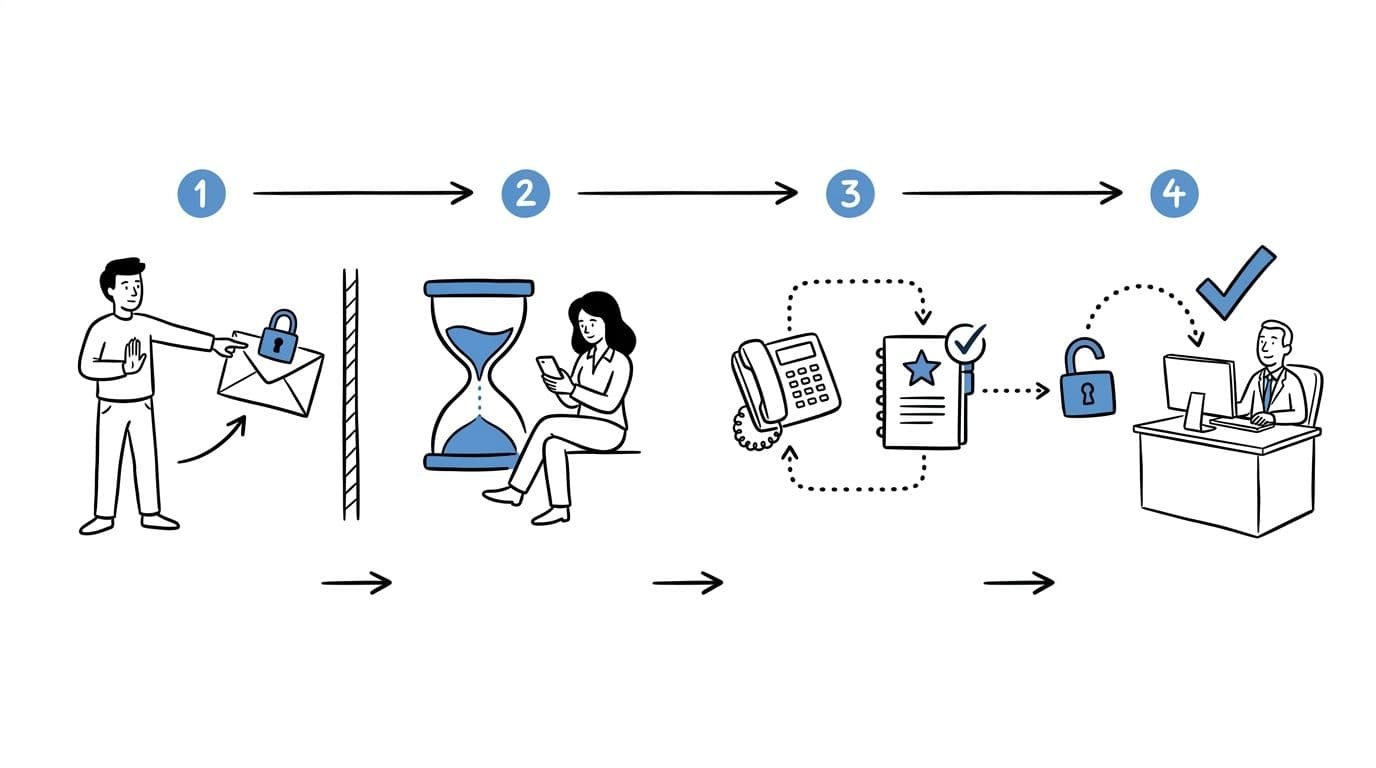
The recruiter may accept alternatives, postpone the check, or explain that current-employer verification is a hiring condition. Resolve that requirement before resigning.
A conditional offer can still depend on satisfactory checks. It isn’t the same as an unconditional appointment.
Keep Your Resume and Reference List Separate
You don’t need to list names or include “references available upon request” on your resume. Provide a separate list when requested, with each person’s permission.
A former supervisor who has moved on can still speak to your work, and positive feedback can support including that job. However, it doesn’t guarantee a hiring outcome.
You may omit a role that lasted under a year, falls outside your target industry, or ended more than ten years ago. Relevance matters more than a rigid cutoff. However, provide complete information when an application explicitly requests your full employment history.
Our AI Resume Builder and industry-specific resume examples can help you emphasize relevant, accurate experience.
For career changes or employment gaps, our Cover Letter Generator can help explain your background without inventing claims.
Useful alternative contacts include a human resources representative or a former colleague who’s now a supervisor or manager at that organization.
Frequently Asked Questions
Will declining contact hurt my chances?
A confidentiality request is reasonable while you’re employed, but no response guarantees a particular hiring outcome. You can decline a call at this stage and offer another workable next step.
If you’re unemployed, explain unavailable references directly and provide other people who can discuss your work. A gap doesn’t require an elaborate defense.
Can I list my current boss as a reference?
Yes, if your boss knows about your search and agrees to participate. Listing them can invite contact, so don’t assume a recruiter will wait.
If someone calls despite your written restriction, preserve the correspondence. Ask recruiting or HR what happened and request that further contact stop. Seek local legal advice if the disclosure causes harm.
Protect Confidentiality With a Clear Agreement
The strongest protection is a documented contact boundary paired with credible alternatives. Legal consent rules vary, while hiring practices differ between employers.
State who may be contacted and when. That gives recruiters a workable path without unnecessarily exposing your current job.