


A presentation interview tests more than just your public speaking skills. It shows how you think, what you notice, and whether you can turn complex information into a clear, actionable recommendation.
In 2026, employers expect proof, not polished filler, when you deliver an interview presentation. They want to see measurable outcomes, simple communication, and steady delivery across in-person, virtual, and hybrid interview formats.
The good news is that strong preparation is usually simple. Start by focusing on exactly what the panel is trying to learn about you.
Key Takeaways
- Hiring teams use an interview presentation to judge your clarity, confidence, and strategic thinking.
- The best presentation slides are short, focused on key points, and directly tied to measurable results.
- AI can help you rehearse and spot weak points so you can better demonstrate your skills, but your delivery should always sound natural.
- Virtual and hybrid interviews reward candidates who test their technology, manage their pacing, and handle questions calmly.
What employers look for in an interview presentation
Most presentation tips still start with design, but that misses the point. The hiring manager first wants to know if you can solve the problem in front of you.
Current hiring expectations put evidence-based reasoning at the center of your interview presentation. If you make a claim, support it with a result, a number, or a clear example. The strongest examples connect actions to outcomes, such as revenue gained, churn reduced, time saved, or customer issues fixed.
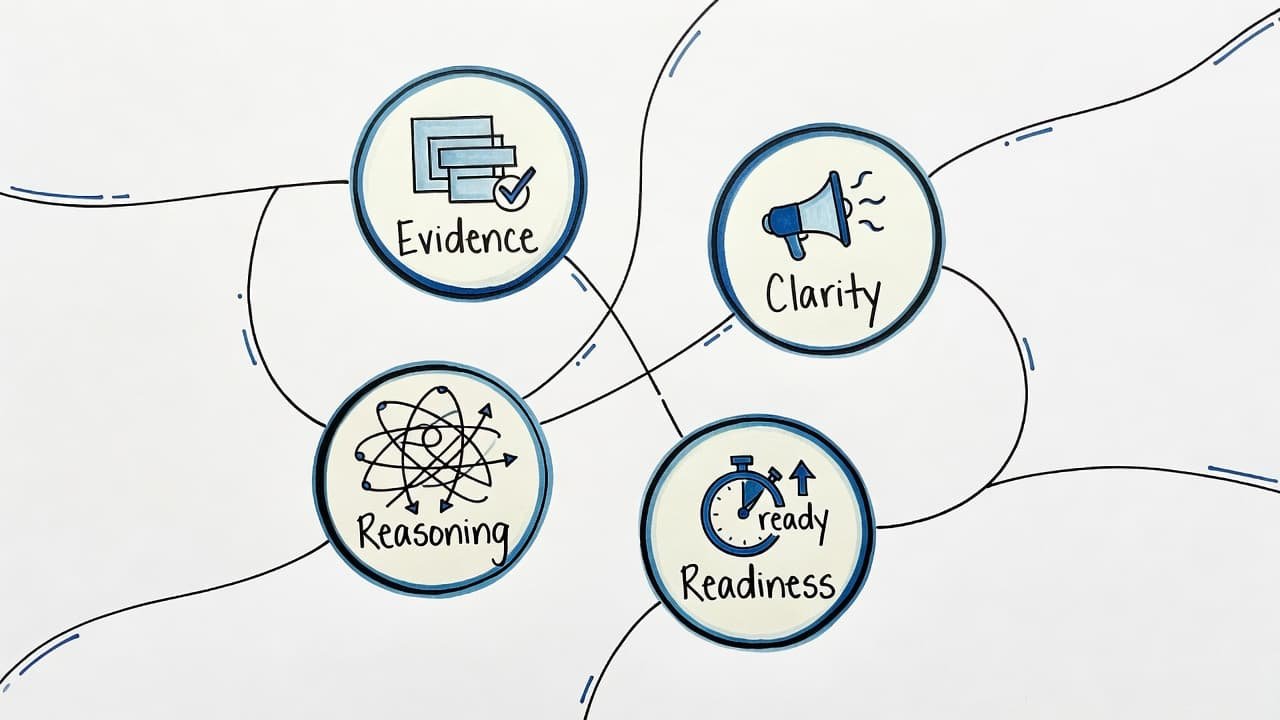
The interview panel also looks for sound judgment. A candidate who explains why they chose one path over another based on cost, risk, or retention sounds stronger than someone who simply lists tasks. This is why a successful presentation relies on structured storytelling to hit the key points without feeling crowded.
Language matters as well. Since many panels include managers, peers, and HR representatives, dense jargon can hurt your performance. Following professional advice, the focus should remain practical: prove you can do the job, show strong written communication, deliver with confidence, and stay organized.
A common format is 10 slides in 10 minutes, although some companies impose a stricter time limit. Keep the first slide focused on the brief, then move through context, options, recommendation, impact, and next steps. Use clear visual aids to support your narrative, and always leave room for questions, as this is where your strategic thinking becomes clear.
A simple prep plan that works
Don’t open PowerPoint first. Build your argument before you build your slides.
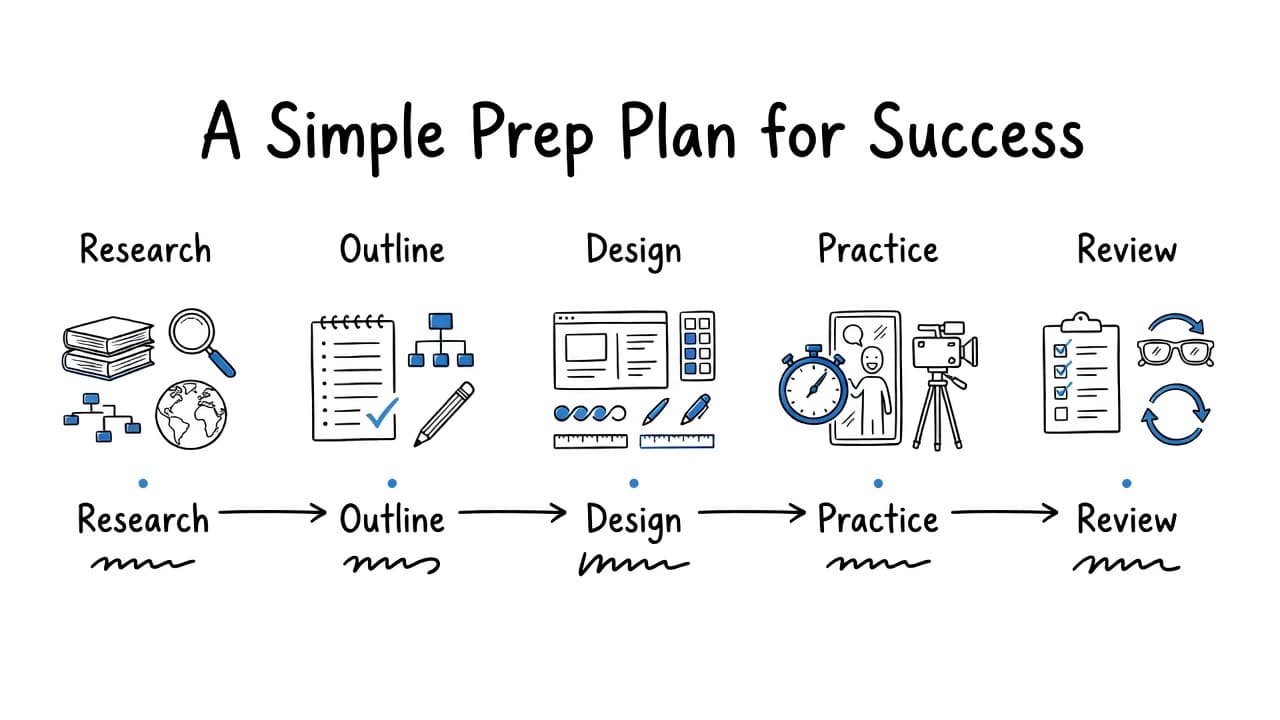
- Analyze the role requirements. Read the job description and research the company to identify the core needs of the hiring team. Mark the verbs, skills, and business goals that repeat throughout these materials. If the role stresses growth, stakeholder management, or operational accuracy, your presentation should echo that language with real examples. If you need help pulling the right achievements from the posting, CareerScribeAI’s AI Resume Builder and Cover Letter Generator can sharpen the stories you already have. A helpful starting point is this guide to getting started with career tools.
- Pick one main message. Every strong interview presentation has a center of gravity. Your primary goal is to answer the prompt directly and effectively. Your core message might be, “I improve customer retention through better onboarding,” or, “I reduce process waste by fixing handoff points.” Support that message with two or three key points using the STAR method (Situation, Task, Action, Result) or CAAR if you prefer a comparison-based story.
- Design slides that act like road signs. When building your slide deck, ensure each slide features a headline that makes a point. Keep your presentation slides clean by using one visual or no more than three short bullets as visual aids. Match the company’s tone where you can, but remember to stay within your time limit. A solid flow for a 10-minute task is title, agenda, context, options, recommendation, impact, implementation, and close.
If a slide needs a full paragraph, it probably needs editing.
- Practice with AI, then practice without it. Record yourself on video to practice your delivery and watch it back to check for clarity, pace, and filler words. Use your preparation time to demonstrate your technical skills alongside your communication ability. CareerScribeAI’s Interview Prep Tools can turn the job description into likely follow-up questions, which is useful because many candidates prepare the deck but not the discussion after it. For broader 2026 guidance, Indeed’s updated interview advice also stresses storytelling, audience awareness, and nonverbal communication.
- Prepare proof and backups. Bring your interview presentation in PowerPoint and PDF formats. Always have a reliable backup plan, such as saving a local copy, a cloud copy, and a USB copy for in-person meetings. Keep one page of notes with numbers, names, and transitions, but do not read from a script. The panel wants to hear you think, not recite.
Delivery tips for virtual and hybrid interviews
Hybrid interviews add one hidden challenge: split attention. Because some people may sit in the room while others join on video, your pacing requires careful time management. Pause after major points, as audio lag can swallow your last few words. When presenting, remember that strong verbal communication skills and clear nonverbal communication are vital to keeping your audience engaged.
If you present remotely, raise your camera to eye level to simulate natural eye contact. Light your face from the front and share only the presentation window, not your full desktop. Keep speaker notes on paper or on a second device, because switching tabs while talking breaks your rhythm. Maintaining steady eye contact with the lens helps build a connection, while your body language should remain open and deliberate. Be sure to practice your delivery to ensure your transitions feel seamless.
Confidence on screen looks simple. Sit still, make deliberate slide transitions, and answer questions in direct language. A recent post on what employers actually evaluate in 2026 highlights honesty, resilience, and thoughtful questions, which often matter as much as the slides themselves.
When the interview panel pushes back during your interview presentation, do not rush to defend every choice. Acknowledge the tradeoff, explain your reasoning, and tie the answer back to business impact. That is what effective interview presentation preparation looks like in real time.
Frequently Asked Questions
How long should my interview presentation be?
Most interview presentations are structured to fit within a 10-minute window, though you should always confirm the exact time limit with your recruiter. Focus on a clear narrative that hits the brief, allows for data-backed evidence, and leaves at least five minutes for a discussion with the panel.
What if I am asked a question I do not have an answer to?
Do not panic or rush to provide a guess that could be incorrect. It is perfectly acceptable to acknowledge the complexity of the question, explain the factors you would evaluate to find the answer, and pivot back to how your methodology would lead to a solution.
Should I include a lot of text on my slides?
Avoid dense paragraphs, as they distract the audience from what you are actually saying. Use your slides as visual aids with high-level headers or single charts that support your spoken points, ensuring the panel focuses on your strategic thinking rather than reading your deck.
Final thoughts
A great interview presentation is rarely the flashiest one. It is the one that answers the brief, shows clear thinking, and backs claims with evidence.
When you prepare, focus on how you can demonstrate your skills to solve real problems for the company. As you rehearse, pay attention to your body language to ensure you appear confident and engaged with your audience. If you research well, build a tight story, and plan for tech problems, you will sound prepared without sounding rehearsed. That balance is exactly what hiring teams look for in an interview presentation in 2026.