

Too many cover letters still end with “Thank you for your time and consideration.” Polite, yes. Memorable, no. While this phrase is a standard part of a professional introduction, it should not be the only thing the hiring manager remembers.
In 2026, the hiring manager often skims fast, and your last lines need to do more than sign off. A motivation letter requires a punchy conclusion to stand out. A strong cover letter closing paragraph shows fit, adds value, and asks for a next step without sounding stiff. That balance is what moves a reader from interest to action.
Key Takeaways
- A strong cover letter closing paragraph restates your fit for the role, adds one specific value point tied to company needs, and includes a clear call to action like requesting a personal interview.
- Avoid generic phrases such as ‘Thank you for your time’ alone or ‘I hope to hear from you’; replace them with confident, open invitations that show what you offer.
- Follow a simple four-part framework: name the position and show interest, highlight a strength or result, ask for a conversation, and end with a professional sign-off.
- Tailor the close to your situation—entry-level focuses on readiness, career changes emphasize transferable skills, and senior roles stress business impact.
- Ensure your ending feels human and direct to stand out from template or AI-generated applications in 2026.
What a strong cover letter ending does now
The best closing paragraph for a cover letter is brief, direct, and tied to the job. Its closing sentence should remind the potential employer why you’re a match by highlighting your qualifications from the job description, point to the value you can bring, and make the next step easy to picture.
That matters more now because generic writing is easy to spot. Many applicants use templates or AI, so a flat cover letter ending blends into the pile. To avoid clichés, a better close feels human because it mentions the role, the team, or a business need in plain language, helping your effective cover letter stand out.
If you’re still unsure about overall structure, this complete 2026 guide to cover letters is a useful refresher. For a focused look at how to end a cover letter, review a few current examples and note how the stronger ones ask for a conversation without sounding pushy.
A good closing paragraph usually does three things in three sentences. First, it restates fit. Next, it adds one clear value point. Then, its closing sentence uses a simple call to action in the cover letter, such as interest in discussing the role further.
What doesn’t work? Vague lines like “I hope to hear from you” or “Please feel free to contact me.” Those phrases put the burden on the employer and say nothing about what you offer. A clear ask is better because it shows confidence and respects the reader’s time.
A four-part framework that makes the ask clear
A strong close doesn’t need fancy wording. It needs a clean structure that conveys a professional tone.
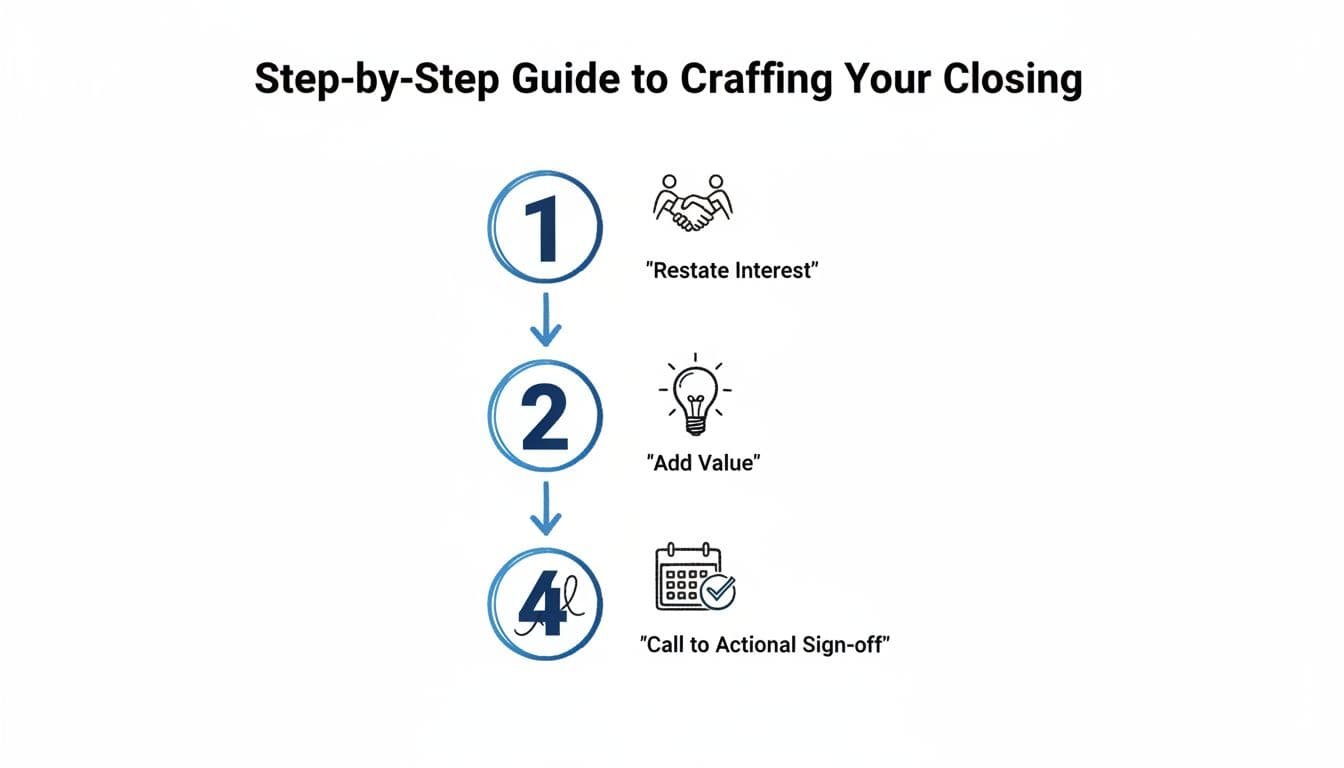
Use this order when writing your closing paragraph:
- Restate your fit for the specific position in one sentence. Name the position and show real interest.
- After you research the company, add one value point. Mention a result, strength, or area where you can help right away.
- Include a clear call to action. Ask for a personal interview, not a vague future contact.
- End with a professional sign-off, then sign your name. “Best regards” and “Sincerely” still work well.
Your call to action in a cover letter should sound open, not demanding. “I’d welcome the chance for a personal interview to discuss how I could support your client retention goals” works better than “Please call me this week.”
A good close sounds like a calm invitation, not a sales pitch.
Here is an example you can adapt:
I’m excited about the Customer Success Manager role at Northline. My background in onboarding and renewal support would help your team improve client retention as you grow. I’d welcome the chance for a personal interview to discuss how I could contribute to that work. Thank you for considering my application.
Notice what this does. It names the role, adds value, and asks clearly. It also avoids filler.
If you want a faster first draft, CareerScribeAI’s Cover Letter Generator can help you build a tailored role-based ending after you paste in the job description. Then edit it until it sounds like you. It’s also smart to match that value claim with the strongest bullet in your resume, so if you use CareerScribeAI’s AI Resume Builder, keep both your cover letter and resume telling the same story. For extra phrasing ideas, these cover letter closing line examples show how small wording changes shift the tone.
Common mistakes, plus examples you can adapt
Most weak closings fail for the same reasons. They’re too generic, too passive, or too long. A weak final paragraph often lacks direction.
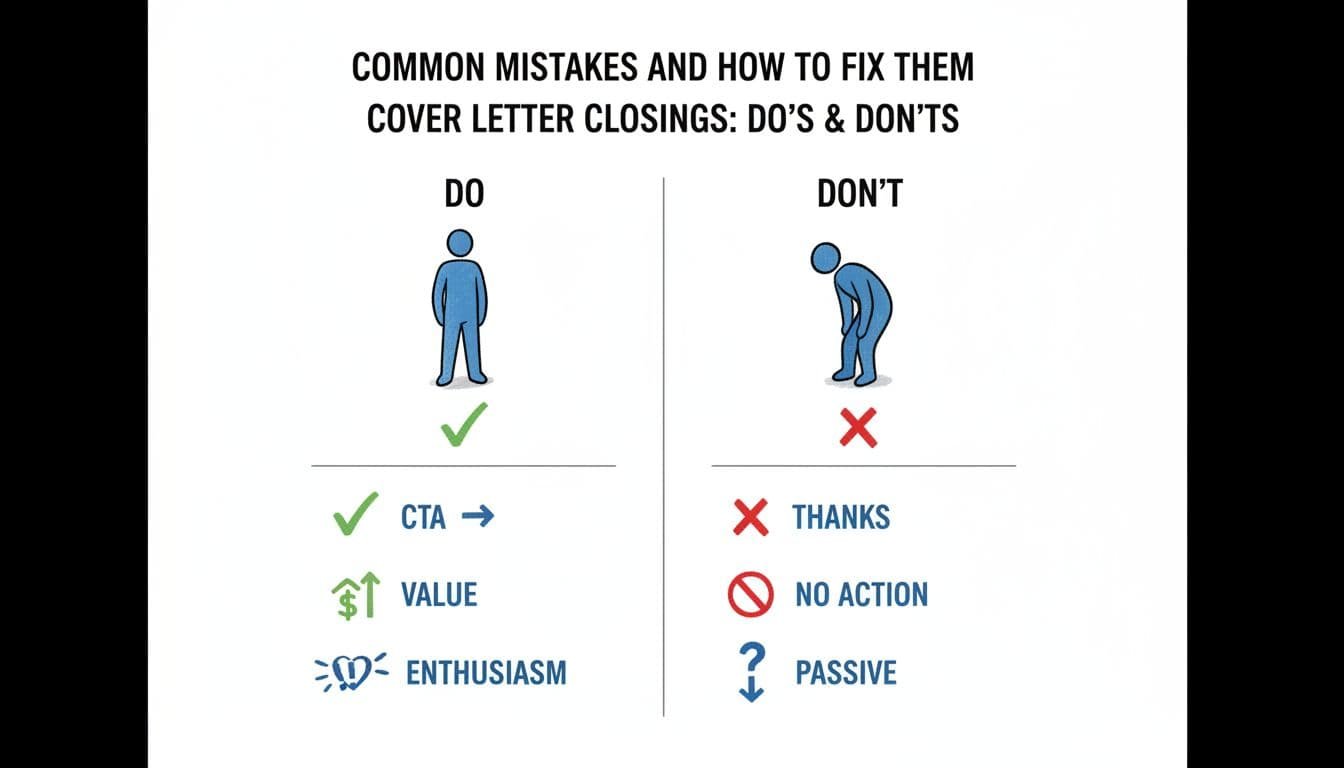
Keep an eye out for these common problems:
- “Thank you for your time” as the whole close. Keep the thanks, but add fit and next step.
- “I hope to hear from you soon” or “I look forward to your response.” Replace hope or polite phrasing with a clear invitation to talk.
- Repeating your entire cover letter in the last paragraph. One value point is enough.
- Sounding overconfident. “I’m the perfect fit” can feel careless unless you’ve proved it.
These rewrites are stronger, conveying self-assurance:
- Weak: “Please feel free to contact me.”
Better: “I’d welcome the chance to discuss how my project coordination experience could support your operations team and follow up on next steps.” - Weak: “I know I would be a great addition.”
Better: “My background in vendor management and deadline tracking would let me contribute quickly in this role.” - Weak: “Hope to hear from you soon.”
Better: “I’m available for a conversation next week if discussing my experience would be helpful.”
The right wording also changes by situation to demonstrate interest. For an entry-level job, lead with readiness and recent experience: “My internship in community outreach gave me hands-on experience with donor communication, and I’d welcome the chance to discuss how I could support your team.” For a career change, highlight transferable skills: “My background in account management has strengthened the client communication and problem-solving skills this role calls for.” For a senior job, make the business value clearer: “I’d welcome a conversation about how my record in reducing churn, bolstered by strong communication skills, could support your 2026 retention goals.”
If you’re writing a shorter application, this short cover letter guide has useful examples of concise closes. After that, prepare for the job interview your paragraph is asking for. A clear close is the first step toward a job interview, so plan how to follow up. CareerScribeAI’s Interview Prep Tools can help you turn that final value claim into stronger answers when the call comes.
Frequently Asked Questions
What makes a cover letter closing paragraph strong in 2026?
A strong close is brief, direct, and tied to the job by restating fit, adding one clear value point from your experience, and making a specific call to action. It avoids clichés and sounds like a calm invitation rather than a sales pitch or vague hope. This structure helps it stand out when hiring managers skim quickly.
How do I write a clear call to action in my cover letter?
Use open phrasing like ‘I’d welcome the chance for a personal interview to discuss how I could contribute to your goals’ instead of demanding requests or passive lines like ‘Please contact me.’ Tie it to the role or company need to show confidence and respect the reader’s time. Keep it in the final sentence after fit and value.
What are common mistakes in cover letter closings and how to fix them?
Avoid standalone ‘Thank you’ lines, repeating your whole letter, or vague hopes like ‘I look forward to hearing from you,’ which put the burden on the employer. Fix by adding fit and value, then a clear ask, as in rewriting ‘Please feel free to contact me’ to ‘I’d welcome discussing my experience next week.’ Keep it to three sentences max.
Should I customize the closing for different job levels?
Yes—for entry-level, highlight recent hands-on experience and readiness; for career changes, stress transferable skills; for senior roles, focus on business results like reducing churn. Always name the position and link to company needs after researching. This makes your close feel tailored and human.
Is a polite sign-off enough for the end?
No, a sign-off like ‘Best regards’ is necessary but not sufficient alone—pair it with the full framework of fit, value, and CTA to move the reader to action. Ensure contact info is visible for easy follow-up. This turns a polite end into a memorable push forward in the hiring process.
Final thoughts
A polite sign-off is no longer enough. Your cover letter closing paragraph should give the employer a reason to keep the conversation going as a vital piece of your application materials.
When you restate fit, add one value point, and ask clearly, your cover letter ending does real work. The last lines should not fade out. They should move the application forward in the hiring process. Ensure your contact information is correct and professional for easy follow-up.