


A promotion to manager rarely begins when you receive the title. It begins when your resume for a first management role proves that you already guide work, people, and decisions beyond your individual tasks.
That evidence can support both career growth and career advancement. Employers assess whether a first-time manager is ready before a formal title. A hiring manager doesn’t expect you to have already supervised a direct report. They do expect clear evidence of ownership, judgment, communication, and measurable results. Build your resume around that evidence.
What Your Resume Must Prove for a First Management Role
Your resume needs to answer one question quickly: can this person help a team perform better? For a first-time manager, surface leadership experience and show the management skills employers need. Lead with outcomes, not a list of routine duties. The University of Pennsylvania’s resume guidance also recommends connecting your experience directly to the opportunity because a hiring manager has limited time to review each application.
Show leadership without exaggeration
You don’t need to claim you “managed” people if you never supervised a direct report. Instead, name what you did accurately: mentored new hires, coordinated cross-functional work, ran a client handoff, trained teammates, or resolved a delivery issue. You can demonstrate leadership without a direct report.
Use the scope you can prove. Mention the size of a project, number of stakeholders, campaign budget, customer volume, or timeline. Honest detail carries more weight than inflated job titles.
Add a focused professional summary
Skip an outdated objective statement. Write two or three lines that connect your experience to the management job and highlight problem-solving and communication skills.
For example:
Operations specialist with five years of experience leading process improvements, mentoring new team members, and coordinating launches across sales and support. Known for improving handoff quality and using performance data to prioritize team work.
This summary frames you as an individual contributor ready for broader accountability.
Build Leadership Experience Before You Apply
Look for assignments that require coordination, not only execution. This builds leadership experience and strengthens a promotion case by showing how you improve how others work.
Take ownership of visible team problems
Volunteer to improve onboarding, document a recurring process, lead a project retrospective, or coordinate a small launch. These assignments build project management experience and can improve operational efficiency. They also give you material for your resume and interviews.
Ask your manager for work that strengthens prioritization, decision-making, and business acumen. Then keep a record of the situation, action, result, and numbers. CareerScribeAI’s story bank can help you save these examples while details are still fresh.
Develop the skills managers use daily
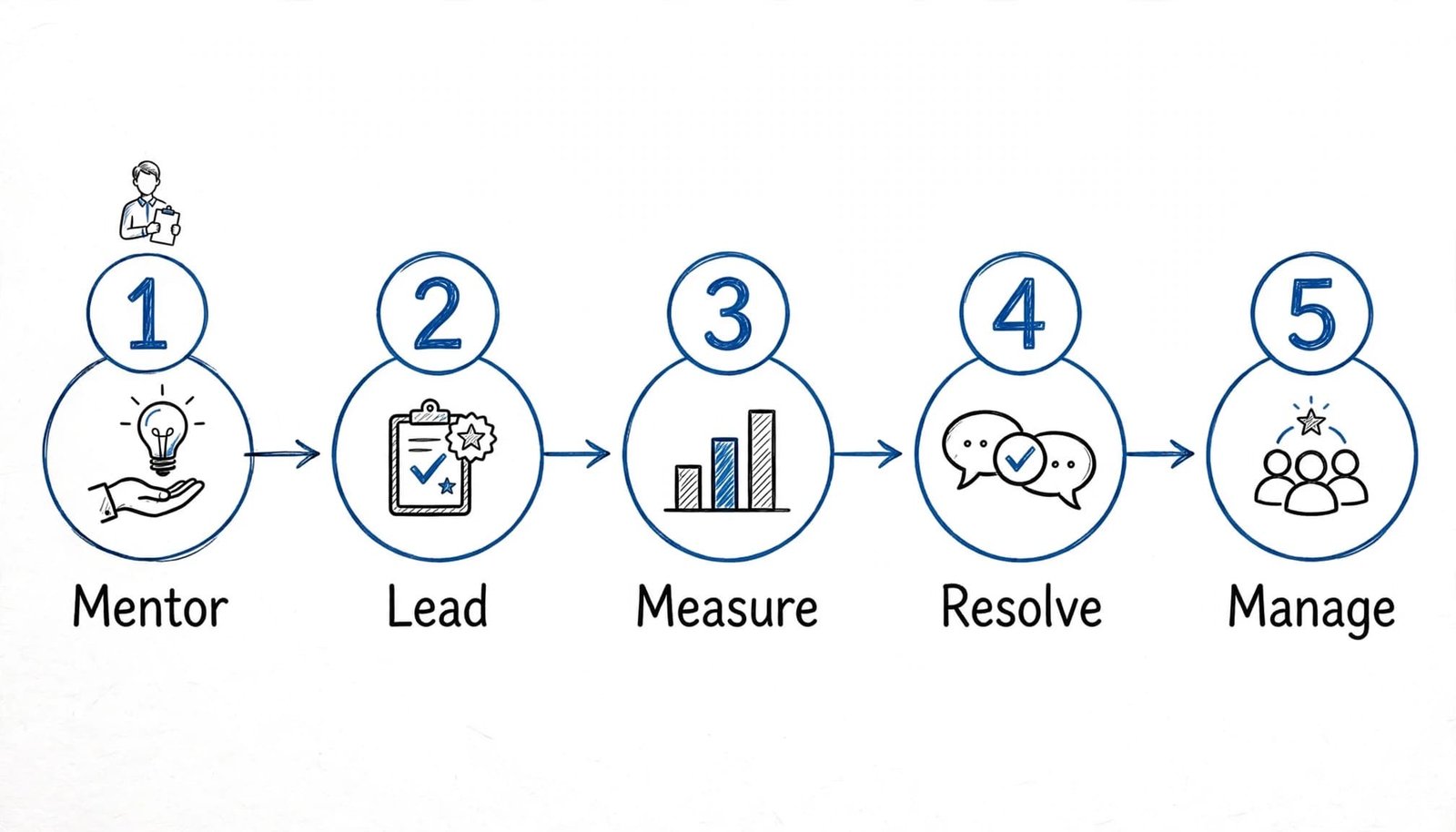
Strong management skills include coaching, delegation skills, conflict resolution, communication skills, and problem-solving. These soft skills can be practiced before managing a direct report.
For instance, mentor a new colleague through a difficult workflow as part of their professional development, perhaps through a realistic mentorship program. Only cite team retention when you can verify that mentoring affected it. Give feedback on a shared project. Facilitate a meeting when teams disagree on a deadline. These moments demonstrate leadership style and professional judgment, while distinguishing informal leadership from responsibility for a direct report.
The University of Texas at Dallas resume resource advises candidates to emphasize transferable skills and results, rather than duties alone.
Turn Individual Contributor Work Into Leadership Bullets
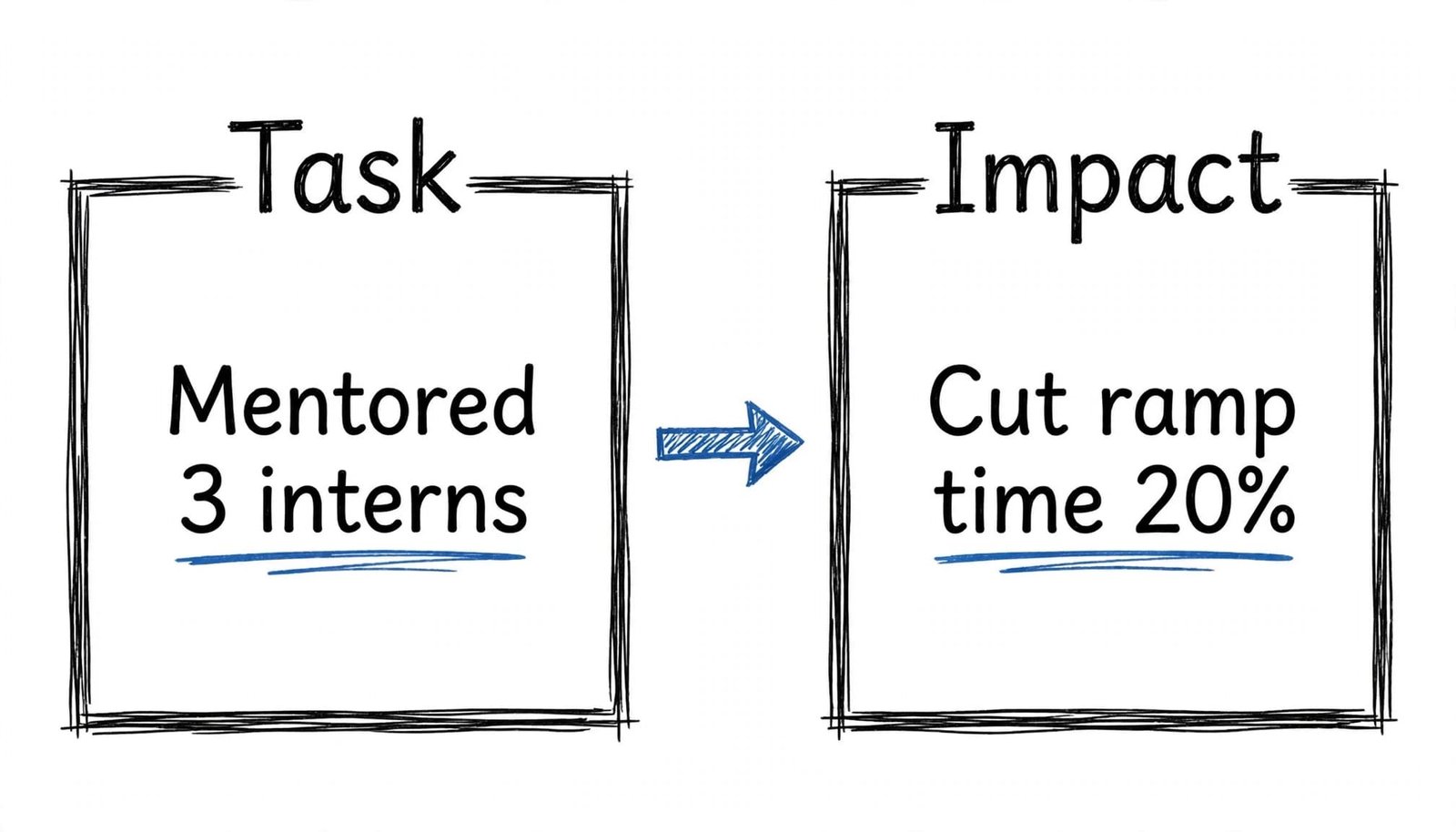
A first management role resume should make every bullet earn its space. Start with a decisive verb, define your leadership scope, explain what changed, and include the business result.
Use the action, scope, outcome formula
Write bullets with this structure:
Action + leadership scope + measurable outcome
As an individual contributor, use bullets to show planning, coordination, dependency tracking, and delivery. These details demonstrate project management and transferable skills. They also strengthen a resume for a promotion by connecting your accomplishments to management readiness.
Instead of “Helped train new employees,” write: “Created and delivered onboarding sessions for 12 new hires, reducing common support escalations during their first month.”
Numbers can show time saved, error reduction, revenue, retention, adoption, volume, or customer satisfaction. If a precise figure isn’t available, use a truthful scope measure such as project duration or stakeholder count. Indeed’s guide to quantified accomplishments offers more ways to turn results into credible metrics.
Rewrite common experience honestly
Here are practical transformations across several fields:
- Operations: “Processed orders” becomes “Resolved conflict between warehouse and customer support teams during daily exception reviews, cutting delayed-order resolution time by 20%.”
- Sales: “Supported account executives” becomes “Organized renewal-risk reviews for a 35-account portfolio, helping the team prioritize outreach before contract deadlines.”
- Technology: “Worked on a website migration” becomes “Led weekly planning for a six-person migration workstream, tracked dependencies, and completed the release on schedule.”
- Creative: “Designed campaign assets” becomes “Set review standards for campaign assets across three channels, reducing revision rounds and protecting launch dates.”
You can show leadership without managing a direct report. Don’t invent a percentage because a bullet looks stronger with one. A hiring manager can test every claim in an interview.
Tailor Each Resume to the Management Job
One generic resume can’t explain why your experience fits every management job. Effective resume tailoring starts by reading the job description closely, then matching your strongest examples and leadership experience to its language.
Match the role’s priorities
A customer success manager role may emphasize coaching, renewals, and escalation management. A marketing manager opening may focus on campaign planning, project management, budget ownership, and cross-functional communication.
Use the employer’s terms where they’re accurate, and use “direct report” only when the posting requires formal supervision and you’ve actually managed one. If it requires strategic thinking, show business acumen through a decision you made using data, customer feedback, or operating goals.
The Harvard College resume guide recommends tailoring content to the role you want, rather than presenting every past responsibility.
Use AI as an editor, not a source of facts
CareerScribeAI’s AI Resume Builder can compare your existing experience with a posting and help create a role-specific version. Its Cover Letter Generator can extend the same evidence into a concise cover letter, while Interview Prep Tools can turn your bullets into likely behavioral questions.
Review every suggestion before using it. AI can identify missing keywords and tighten wording, but it can’t know your actual results, leadership experience, or motivation for becoming a manager.
Key Takeaways
- Build a resume for a first management role around leadership evidence, not an unearned management title. You don’t need formal responsibility for a direct report to prove leadership.
- Show scope through projects, mentoring, stakeholder coordination, and process ownership.
- Quantify outcomes whenever you can verify the number.
- Tailor the summary, skills, and bullets to each management job.
- Save your best examples for interviews as structured stories.
FAQ
How do I get a management job without a direct report?
Show relevant informal leadership, including mentoring, project ownership, training, stakeholder coordination, and conflict resolution. Be precise about your authority, scope, and impact, even without a direct report.
Which management skills belong on a resume?
Prioritize skills supported by examples, such as coaching, communication, delegation, project management, prioritization, problem-solving, and business acumen. Include performance management only if you’ve handled feedback, goals, or development responsibilities.
How should I prepare for a first manager interview?
During the interview process, prepare stories about giving feedback, handling disagreement, setting priorities, and helping someone improve. Explain your actions and results clearly.
Put Evidence Ahead of Job Titles
Your first manager application doesn’t need to compete on years of formal supervision. It needs to show responsibility beyond your own desk, even without a direct report.
A strong first management role resume makes that case with accurate scope, project management examples, measurable outcomes, and evidence that carries naturally through the interview process.