
Ever had an application ask about work authorization and felt like the “right” answer depends on who’s reading it, especially international students planning their 2026 work rights? You’re not alone. Recruiters want a quick yes or no, but immigration terms can turn a simple checkbox into a stress test.
This guide gives US style resume work authorization wording you can copy as-is in 2026, plus clear “no sponsorship needed” guidance for application forms (work authorization: yes/no, sponsorship: yes/no) for US citizen, green card holders, H-1B, and F-1 OPT or STEM OPT.
What “work authorization” means in hiring (and what your resume should avoid)
In plain terms, work authorization answers one question: Do you have the legal right to work in the U.S. for this employer right now? That’s it. Employers still verify documents after you accept an offer, using Form I-9. If you want the official source for what that process is, USCIS explains it on the I-9 employment eligibility verification page.
For your resume, the goal is speed and clarity. A recruiter scanning international students’ resumes or others in 15 seconds should know whether there’s a sponsorship issue and focus on your professional experience. That’s why many candidates add a single line near the top (often in a “Summary” or “Additional Information” area).
What not to do: don’t treat your resume like an immigration file. Avoid listing document numbers (A-Number, I-94, SEVIS), uploading passport scans, or naming your immigration status or categories that aren’t needed for hiring decisions.
Quick rule: share the minimum that answers the hiring question. Save detailed documentation for onboarding.
Also, keep in mind employers generally shouldn’t ask you to show specific documents before hire, and employees can choose from acceptable documents to prove work authorization. If you want the exact wording and boundaries, review the USCIS Form I-9 instructions (PDF).
Simple resume wording for work authorization (copy-ready lines)
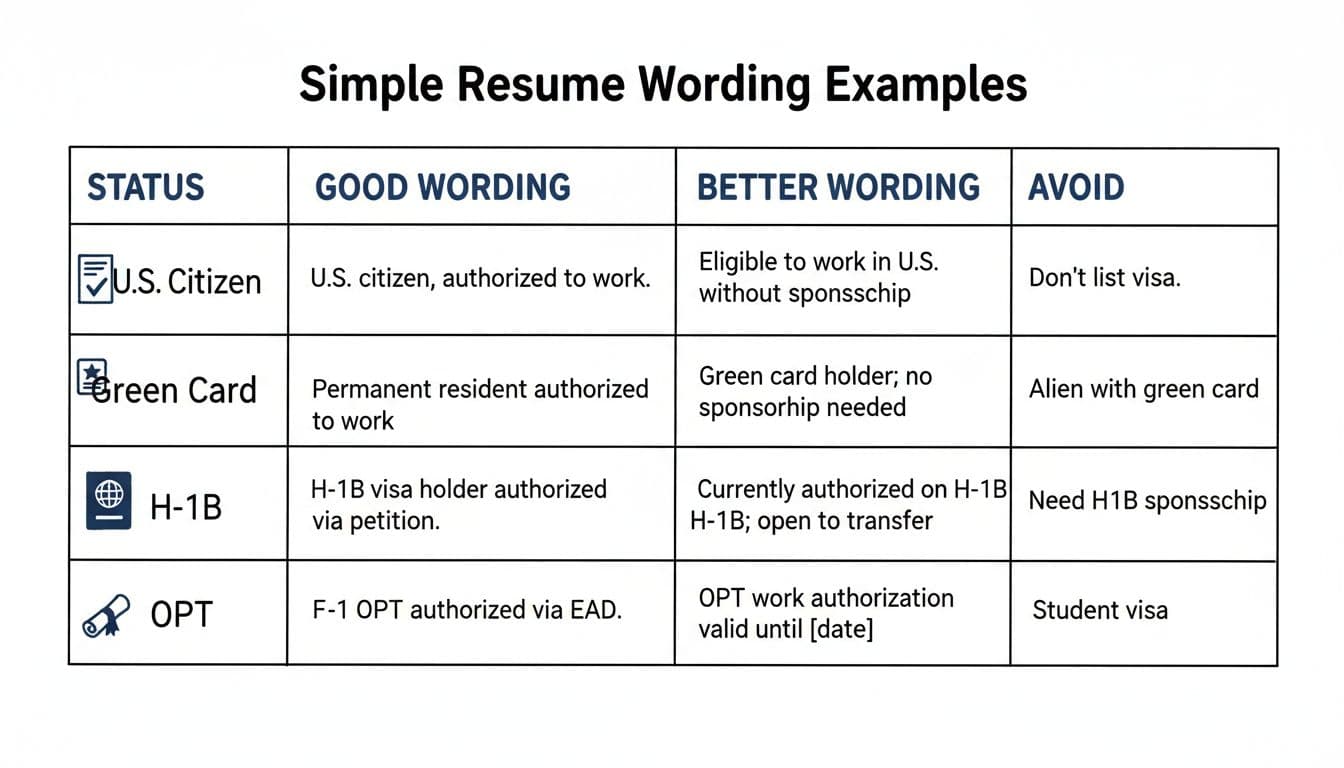
Use simple wording for resume: one line. Put it where it’s easy to find. If you’re applying through ATS, simple phrasing is best.
Copy-ready options by status (2026)
U.S. citizen
- “U.S. citizen. Authorized to work in the United States.”
- “Eligible to work in the U.S. with no sponsorship required.”
Green card (lawful permanent resident)
- “Lawful permanent resident (green card; permanent residency). Authorized to work in the U.S.”
- “Green card holder, authorized to work in the U.S., no sponsorship needed.”
H-1B (currently in the U.S.)
- “Authorized to work in the U.S. on H-1B visa status (H-1B visa transfer eligible).”
- “Currently authorized to work in the U.S. (H-1B visa). Will require employer support for extensions.”
F-1 OPT (Optional Practical Training)
- “Authorized to work in the U.S. on F-1 OPT (EAD valid through MM/YYYY).”
- “Work authorized in the U.S. on OPT through MM/YYYY. Sponsorship may be needed after OPT.”
F-1 STEM OPT
- “Authorized to work in the U.S. on STEM OPT (EAD valid through MM/YYYY; 24-month STEM extension for programs with STEM designation).”
- “Work authorized on STEM OPT (STEM extension) through MM/YYYY, provides 3-year work permit, may require future sponsorship.”
Don’t overshare: your resume doesn’t need “alien,” passport details, an I-94 number, or a document upload note. Keep it readable and professional.
If you’re updating several versions of your resume for different roles, tools like CareerScribeAI can help you keep this line consistent while tailoring the rest of your resume to the job description, and it can also generate cover letter language that matches your eligibility without sounding stiff.
Comparison table (resume vs application form)
| Status | Resume line (short) | Work authorized now? | Will you require sponsorship (now or later)? | Notes |
|---|---|---|---|---|
| U.S. citizen | “U.S. citizen, no sponsorship required.” | Yes | No | No end date needed. |
| Green card | “Lawful permanent resident, no sponsorship needed.” | Yes | No | Avoid slang terms. |
| H-1B | “Authorized on H-1B, transfer eligible.” | Yes | Yes | Many forms mean “ever,” so answer carefully. |
| F-1 OPT | “OPT EAD valid through MM/YYYY.” | Yes | Often yes | Authorized now, future need depends on plan. |
| F-1 STEM OPT | “STEM OPT EAD valid through MM/YYYY.” | Yes | Often yes | Some employers still treat as future sponsorship. |
How to answer work authorization and sponsorship on applications in 2026
Applications usually ask two separate things, and mixing them up is where international students get burned:
- “Are you legally authorized to work in the United States?”
- “Will you now or in the future require sponsorship for employment visa status?”
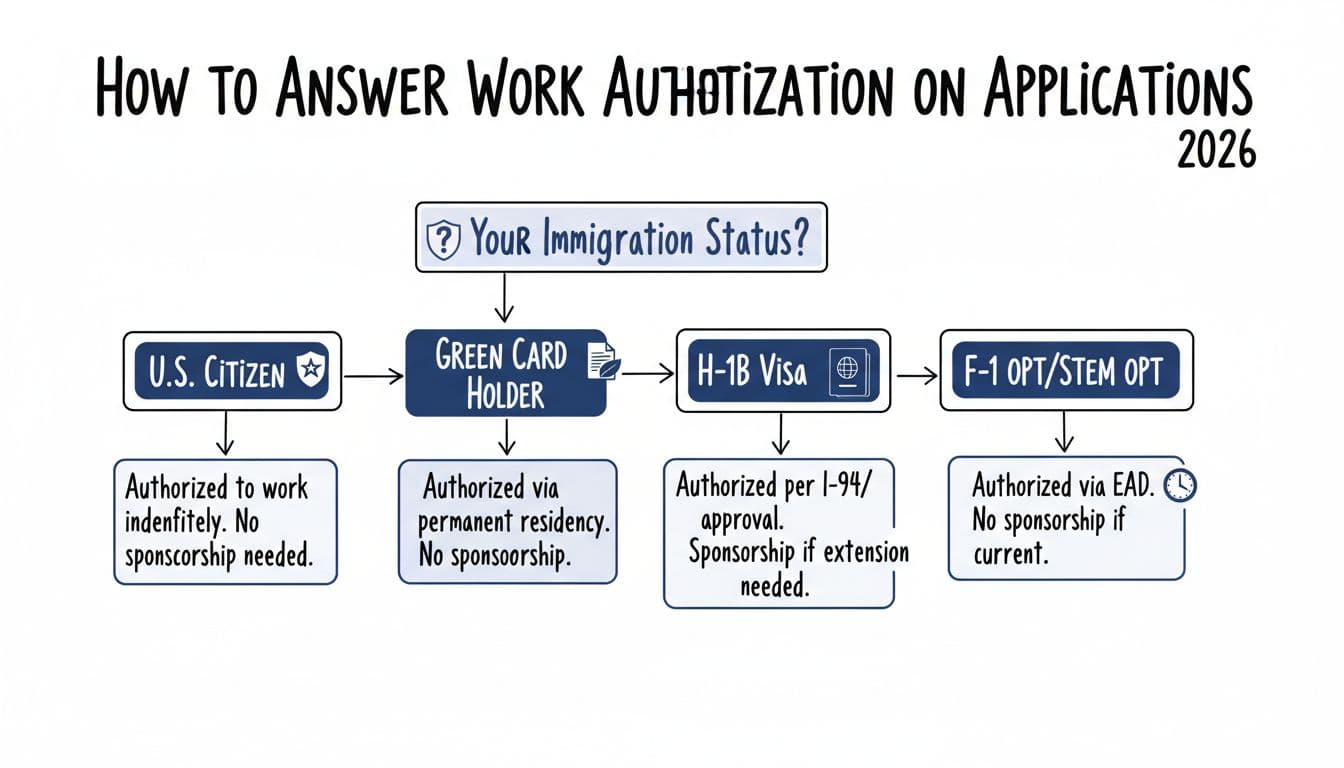
A U.S. citizen and a green card holder can typically answer: Yes to authorized, No to sponsorship.
For H-1B, you’re authorized now, but many companies consider H-1B employment a form of employer sponsorship because the employer files or supports petitions and extensions. So it’s common to answer: Yes authorized, Yes sponsorship (because the question often includes “in the future”).
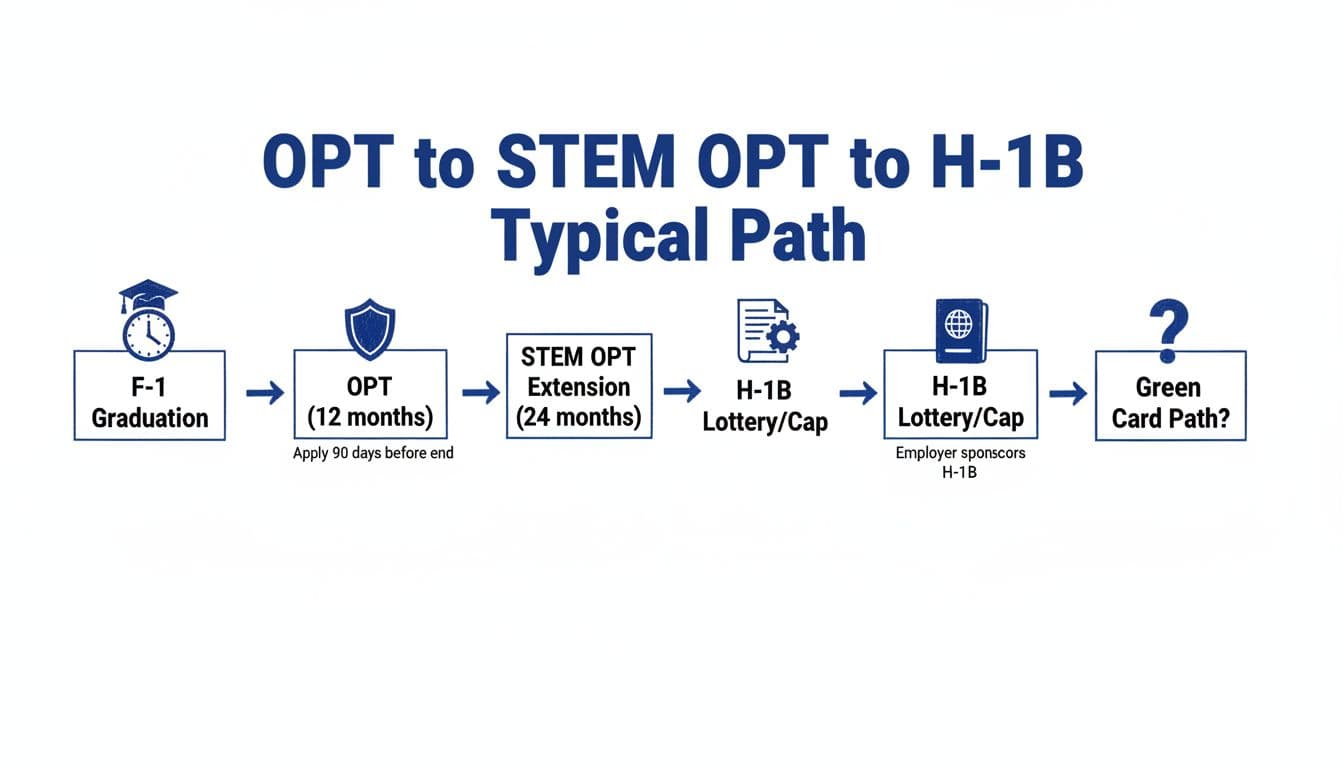
For OPT and STEM OPT, you’re authorized while your EAD is valid, but many international students still answer “Yes” to future sponsorship because OPT ends and you may need an H-1B lottery entry or other path later to maintain your I-20 form and legal status. If a form allows a short explanation, keep it simple: “Authorized on OPT through MM/YYYY.”
If you need background on employment authorization, USCIS outlines it on the I-765 employment authorization page. (This is general information, not legal advice.)
Step-by-step checklist: make your answers consistent
- Pick one resume line that matches your current status.
- Decide if the application’s sponsorship question includes “in the future.” Most do, and they often probe employer sponsorship needs for long-term career paths.
- If you’re OPT or STEM OPT, include an end date on the resume line.
- Don’t contradict yourself across systems (resume, application, recruiter email).
- Prepare a 10-second explanation for screening calls: current authorization, end date (if any), and whether future sponsorship is likely, including transitions that factor in full-time employment commitments and entry-level salaries.
- After an offer, share documents only during the employer’s formal I-9 process, noting that sponsorship required may involve complex steps like Labor Certification or an EB-2 Green Card.
CareerScribeAI’s interview prep tools can also help you practice sponsorship questions so you sound calm and consistent, instead of caught off guard.
Conclusion
Clear work authorization wording works like a good label on a moving box. It tells the reader what they need about your US work visa, without dumping everything on the floor. Use one clean line on your resume, answer application questions based on “now” versus “now or in the future,” and keep sensitive details for onboarding. For graduates transitioning to post-study work or those on OPT from an F-1 visa, if your status has a time limit, add the date, then focus the rest of your resume on results.