
A layoff can feel like a stamp you didn’t ask for. But when you update your resume, it doesn’t have to look dramatic, or even look like anything at all.
The goal with a layoff on resume decisions is simple: remove confusion, protect your credibility, and keep the focus on results. In 2026, recruiters and applicant tracking systems move fast, so clarity beats extra detail every time, helping you define your career story for the reader.
Below is a practical framework for when to mention a layoff, when to skip it, and wording that stays neutral (and never hints at performance issues).
Decide first: mention it, hint at it, or skip it
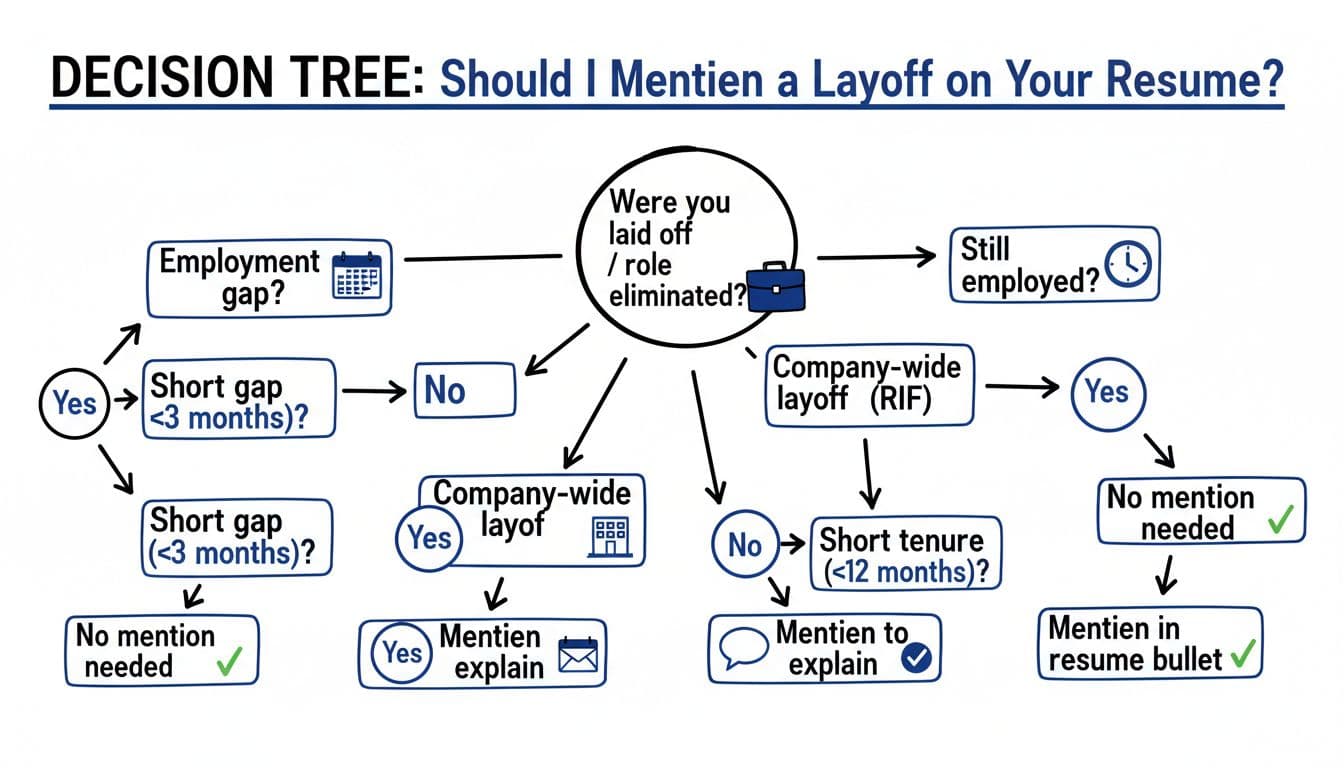
A resume is a highlight reel, not a full story. So you only mention a layoff when it prevents a hiring manager from making the wrong assumption (like “job hopper” or “performance issue”).
Here’s a clean way to decide:
| If this is true… | Best approach | Why it works |
|---|---|---|
| No employment gaps, normal tenure | Skip it | Nothing to explain |
| Short tenure (under 12 months) | Brief note on resume | Prevents “why so short?” questions |
| Clear company-wide restructuring | Optional brief note | Signals it wasn’t personal |
| You have a career gap | Explain the gap, not the drama | Hiring managers notice career gaps first |
A helpful rule: if the layoff isn’t visible in your career timeline, it usually doesn’t belong on the resume. Save the context for the interview, where you can say it once and move on.
For another perspective on how to frame layoffs without over-explaining, see FlexJobs’ layoff-on-resume tips.
Clean wording for a layoff that stays neutral
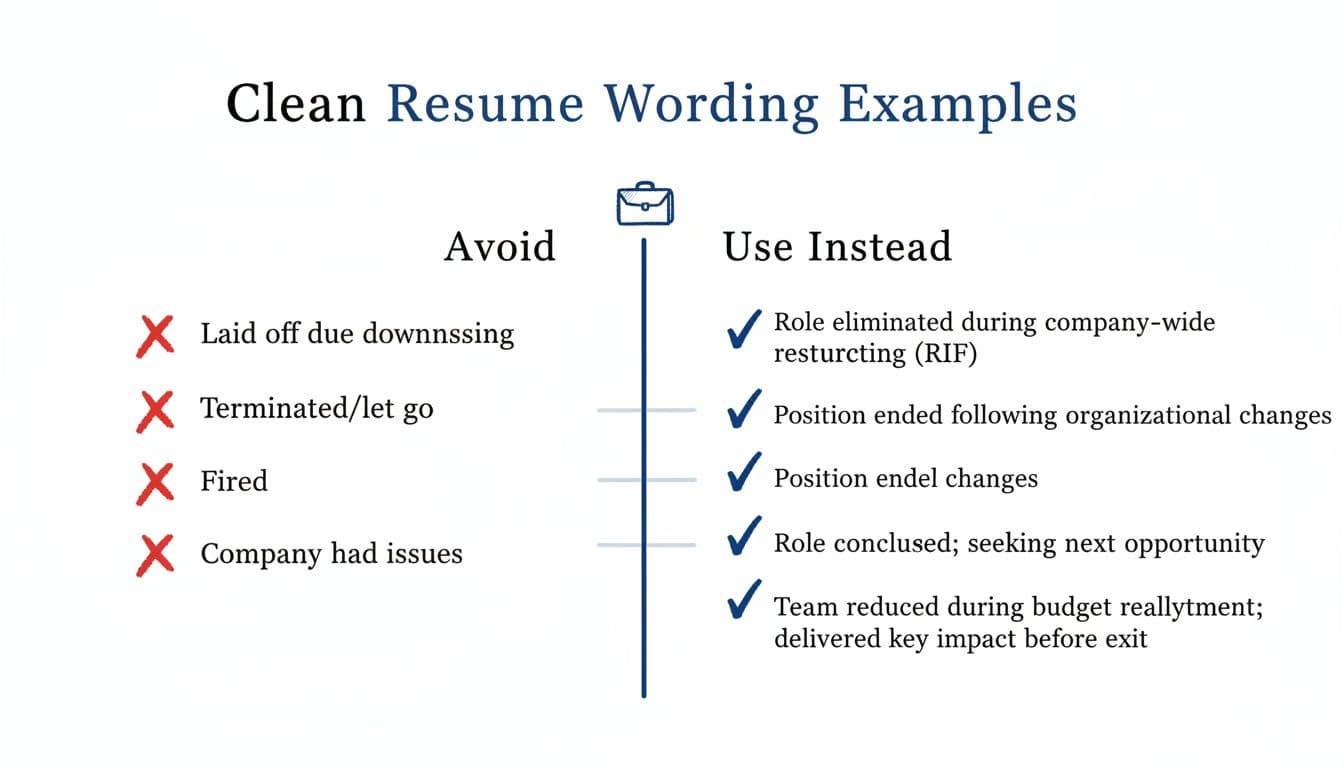
When you do mention it, your wording should be boring in the best way. Neutral. Short. Hard to misread.
Use these principles:
- Say what happened (role eliminated, RIF, restructuring), not how you felt about it.
- Don’t mention internal drama, conflict, or blame.
- Keep it to one line, then return to achievements.
- Focus on measurable accomplishments.
Resume-friendly parentheticals (short and clean)
Use these sparingly, usually only when tenure is short or you need to explain an obvious ending.
- Position eliminated during company-wide restructuring (RIF)
- Position eliminated due to organization-wide workforce reduction (RIF)
- Role eliminated following department reorganization
- Position ended after product line closure
If you want more guidance on navigating mass-layoffs and wording differences between being laid off and other separations, this Monster article on termination and resumes breaks down the basics.
Bullet templates that keep the focus on measurable impact
These are written to avoid any performance implication, while still answering the “why did it end?” question:
- Achievement first, then context: “Reduced monthly close time by 22% by automating reconciliations; role later eliminated during company-wide RIF.”
- Scope and outcomes: “Managed a $1.4M vendor portfolio and cut costs 11%; position ended following organizational changes.”
- Project handoff: “Delivered CRM migration for 12 teams (on time, under budget); role eliminated after department consolidation (RIF).”
- If asked to show continuity: “Maintained 99.9% uptime across core services; team reduced during budget realignment (RIF).”
- If it was a contract end (not a layoff): “6-month contract concluded as scheduled; delivered 18 SEO pages and improved organic signups 9%.”
If you’re tailoring bullets to a job post, tools like CareerScribeAI can help you reshape these templates into ATS-friendly action-oriented bullets, match the job description keywords, and keep the “why it ended” note brief.
How to handle common layoff scenarios (without making your resume weird)
A layoff on resume choices often depend on what the dates look like. Recruiters scan dates like an employment history. If the employment history looks smooth, stay quiet. If it looks choppy, add one calm signpost.
Scenario: No gap (you moved right into the next job)
Skip the layoff. List your role, your dates, and your wins. Most hiring teams won’t ask, because nothing looks unusual.
If your company is widely known for layoffs, you still don’t need to label it. A resume isn’t a press release.
Scenario: Short gap (a few weeks to 3 months)
Usually skip the layoff and handle the transition period with recent activity:
- Add a line for a certification, course, or consulting work, if it’s real.
- Consider listing years only on older roles, but keep recent roles clear.
If you do mention it, keep it to one short parenthetical, then move on.
Scenario: Long gap (3+ months)
Don’t turn the gap into a confession to explain a layoff. Do make it easy to understand.
- If you took time to retrain, add a small “Professional Development” entry.
- If you freelanced, show it as a role (even part-time), with results.
If you feel you must explain the start of the gap, do it in a cover letter with one sentence, and keep the resume focused on skills.
Scenario: Short tenure (under 12 months)
This is the most common reason to mention a layoff on resume. Without context, a short-term job can look like a mismatch.
Add a short parenthetical or a bullet note:
- “Role eliminated during company-wide RIF.” Then stack two to three strong bullets underneath that prove you delivered value fast.
Scenario: Contract ended vs layoff
Don’t call a contract completion a layoff. Use clear wording:
- “Contract concluded as scheduled.”
- “Engagement ended after project delivery.”
This reads as normal business, and transparency prevents confusion in background checks later.
Scenario: Still employed (you were notified, or your team is at risk)
If you’re still employed, your resume should show “Present” and your achievements. Skip the layoff language until it’s real and dated.
If an application asks directly (“Reason for leaving?”), answer honestly in that field. Keep the resume clean.
Where to explain it: resume, cover letter, LinkedIn, interview questions
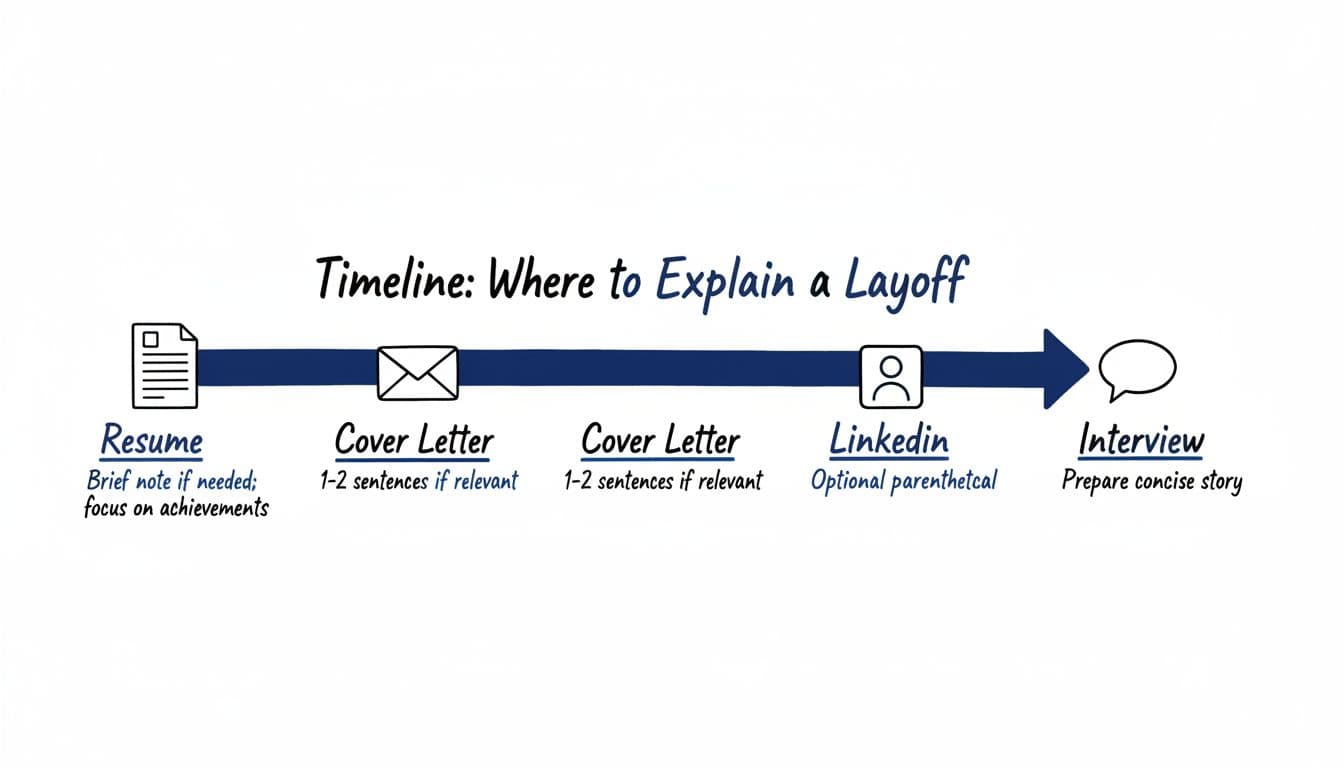
Strategic choices on where to explain a layoff give you narrative control over your story.
- Resume: Only add a note if tenure is short or the timeline looks unclear.
- Cover letter: Best place for a one-sentence explanation. CareerScribeAI’s cover letter generator can help keep it tight and role-focused.
- LinkedIn: Optional. If you add anything to explain a layoff, keep it minimal (for example, “Open to work after a RIF”).
- interview questions: Prepare a 10 to 15 second answer, then pivot to strengths. CareerScribeAI’s interview prep tools can help you practice until it sounds calm and natural.
Mini-FAQ and quick checklist
FAQ
Should I write “laid off” on my resume?
Only if it prevents a negative assumption (short tenure or a confusing gap during a skill upgrade). Otherwise, skip it.
Is “RIF” okay to use?
Yes. Write it once as “reduction in force (RIF)”, then you can use “RIF” later.
Do professional resume writers recommend including RIF details?
Yes, professional resume writers often suggest briefly noting RIF details for context. Use neutral phrasing like “RIF (reduction in force)” to clarify without overexplaining.
Will ATS reject me if I mention a layoff?
Most ATS systems don’t score you down for that phrase, but humans can misread emotional wording. Keep it neutral.
Do I need proof it was a layoff?
Don’t attach documents unless asked. Keep your resume factual and consistent with any verification.
For reliable, non-hype context on job searching and labor conditions, bookmark BLS guidance on finding a job and the BLS JOLTS layoffs and discharges table.
Quick checklist (before you send)
- Your dates are consistent and easy to scan.
- Any layoff note is one line max.
- You used “role eliminated” or “RIF”, not emotional language.
- You listed 2 to 4 outcome-based bullets under that role.
- Resume highlights relevant experience and frames the transition as a strategic pivot.
- Your interview explanation is short, calm, and practiced.
Conclusion
A resume entry wording choice isn’t about hiding facts, it’s about keeping your story clear throughout your job search journey. If the layoff doesn’t create confusion, skip it. If it does, name it in one neutral line, then let your results do the talking. When you can explain it simply, it stops being a shadow and becomes a footnote.