


Most resumes should go back 10 to 15 years of professional experience, but that rule is only the starting point.
If you’re trying to decide how far back your resume should reach, the better question is simpler: which parts of your work history still help you win this job now? In 2026, hiring teams move fast, ATS filters still matter, and older experience only earns space if it adds proof.
The goal is a focused resume, not a life story. That starts with knowing what to keep, what to trim, and how to present older work without burying your strongest qualifications.
Key Takeaways
- Most resumes should cover the last 10 to 15 years of relevant professional experience, adjusting for career stage: entry-level up to 5 years or all, mid-career 10-12 years, senior 12-15 years.
- Relevance trumps age—keep older jobs only if they prove skills, keywords, or leadership for the target role; otherwise, summarize or cut them.
- In 2026, focus on ATS-friendly formats, fast scans, and a concise pitch: one page for early-career, two for experienced pros, with detailed bullets for recent wins.
- Handle older experience in ‘Additional Experience’ sections, gaps with brief notes if needed, and use cover letters or tools to explain pivots without cluttering.
- A focused resume shows judgment and seniority—trim to highlight momentum, measurable impact, and fit for the job.
The 10 to 15 year rule still makes sense for most resumes
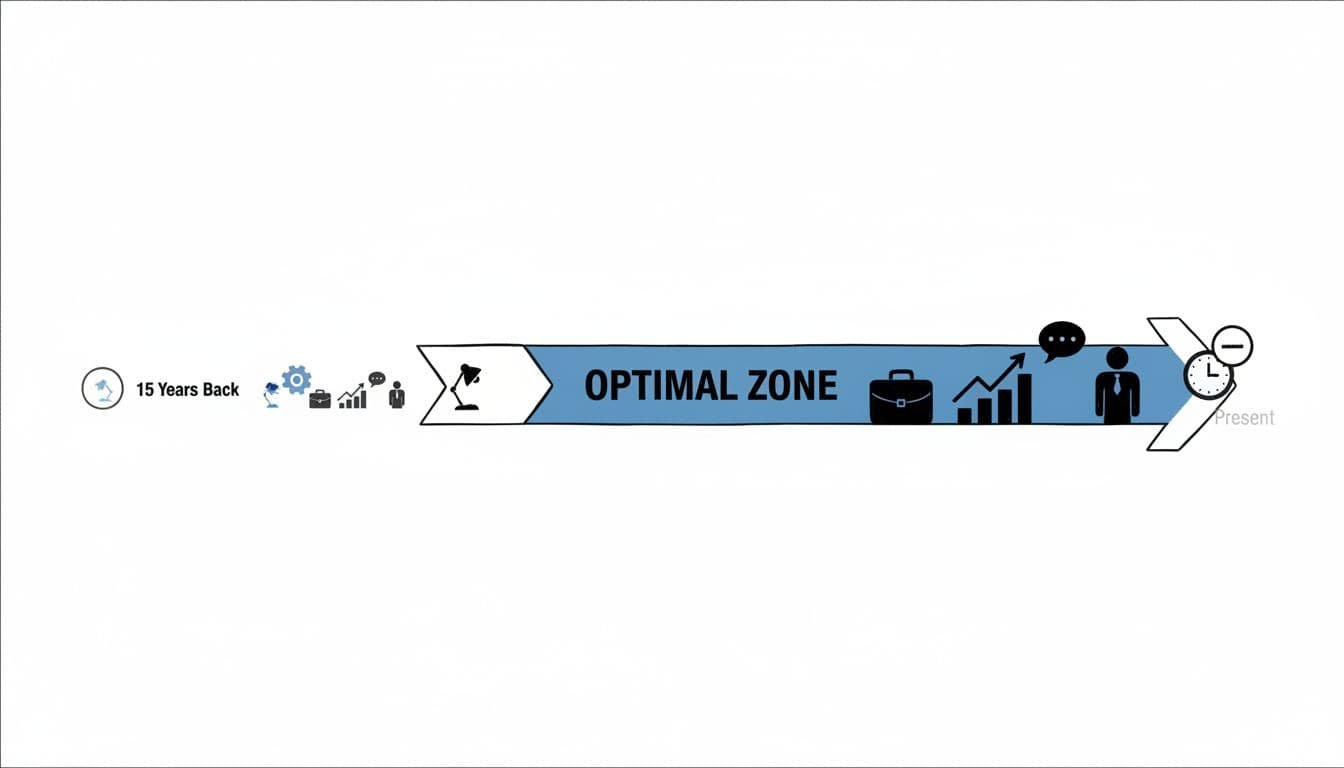
For most job seekers, the industry standard is for a resume to cover the last 10 to 15 years of relevant work. That window usually shows your current skills, recent wins, and career growth without turning the document into a timeline of every job you’ve ever held.
That advice lines up with the common 10 to 15 year resume rule from Monster and the more flexible view in Careerflow’s 2026 guide, which puts the target role first.
If you have less experience, include all of it. If you have 20 or 30 years of history, don’t try to squeeze every role into full detail. The hiring manager reviews the work history section for relevance, caring most about what you’ve done in the last 10 to 15 years and how that maps to their opening.
A strong resume also respects page length. In 2026, a one-page resume is still best for students and early-career applicants. A two-page resume is normal for experienced professionals. Three pages only make sense in rare cases, such as senior leadership, curriculum vitae, or federal applications.
Older jobs aren’t worthless. They simply need less space. A role from 18 years ago may still matter if it supports your relevant experience and current direction. If it doesn’t, cut it or compress it into a short “Additional Experience” note.
Keep detailed bullet points for the relevant experience that supports your next role, not every role you’ve ever had.
This is where many resumes go wrong. People treat the document like an archive. A resume is a pitch. That means recent, relevant, and easy to scan beats complete every time.
Why relevance matters more than age in 2026
A resume in 2026 has two readers: software and people. Both reward focus.
ATS systems still prefer simple layouts, standard headings, and clear keywords. Resume formats such as the chronological resume are often preferred for their clarity, helping parsers read your file. As SparrowCV’s ATS-friendly resume guide explains, clean formatting and predictable structure still matter. Consider including a qualifications summary to highlight key wins upfront. Enhancv’s 2026 ATS advice makes the same point, adding that measurable results and job-specific wording from the job description, balancing hard skills and soft skills, matter more than design tricks.
That changes how far back your resume should go. If an older job in your work history section gives you a keyword match, shows direct industry experience, or proves leadership, keep it. If it adds noise, remove it. Space on a resume is expensive.
For example, say you’re applying for a product manager role in 2026. Your last three jobs show roadmap ownership, cross-functional work, and revenue impact. A retail supervisor job from 2009 may show hustle, but it probably doesn’t help unless you’re early in your career or making a retail-tech move.
Fast hiring cycles make this even more important. According to Fast Company’s 2026 resume playbook, resumes now face tighter review windows and more AI-assisted screening. Every bullet needs a reason to exist.
This is also where tools can help. If you’re trimming an overstuffed draft, CareerScribeAI’s AI Resume Builder can help align bullets to a job posting, improve phrasing, and surface the experience that best matches the role. That makes it easier to decide what belongs in the final version and what should stay off the page.
A shorter, sharper resume often looks more senior than a long one. It shows judgment. It tells the employer you know what matters.
How far back to go by career stage
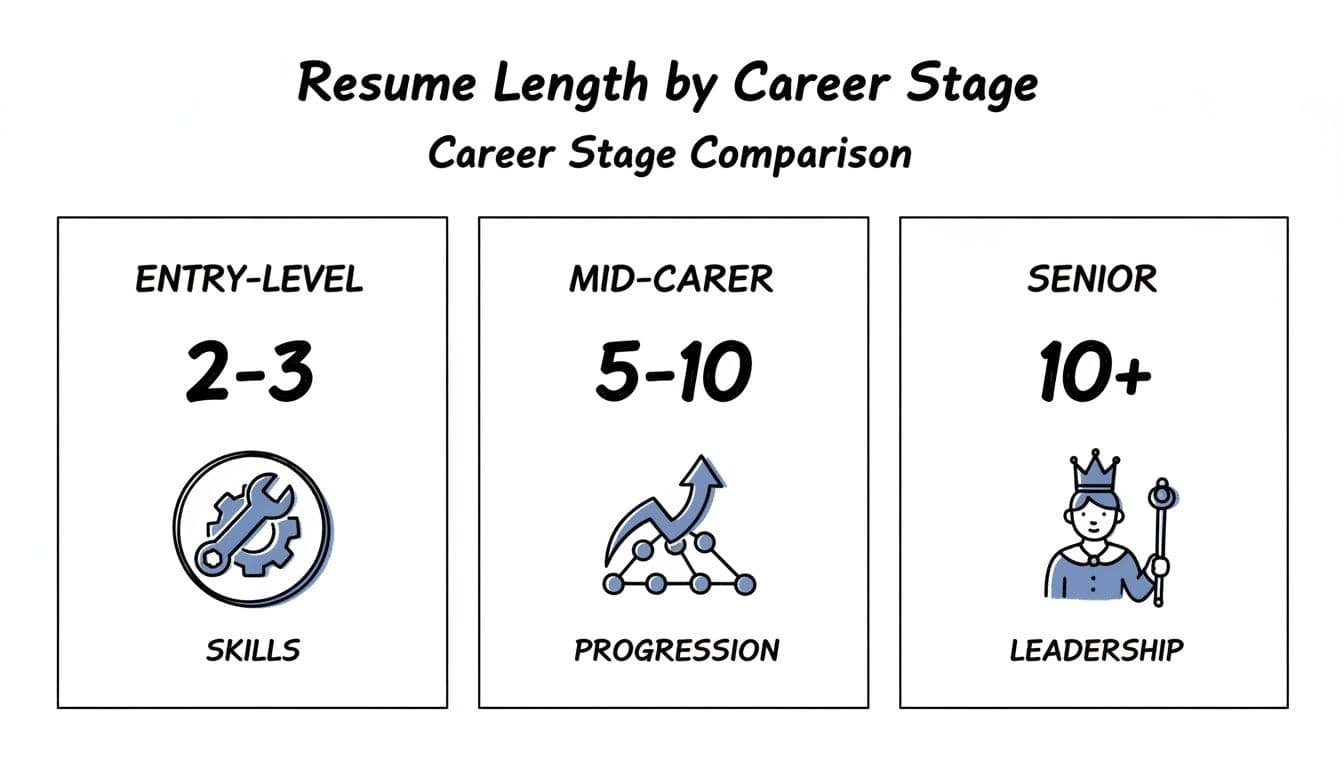
The best cutoff depends on where you are now and where you want to go next. This quick guide gives a practical baseline.
| Career stage | How far back to go | What to emphasize |
|---|---|---|
| Entry-level positions | Up to 5 years, or all experience | Internship experience, part-time work, projects, skills, results |
| Mid-career | 10 to 12 years | Promotions, ownership, measurable impact |
| Senior-level professionals or executive | 12 to 15 years in detail | Scope, leadership, strategy, team size, budget |
| Career change | Relevant experience only, even if older | Transferable skills, related skills, proof of fit |
The main takeaway is simple: career stage shapes resume depth.
If you’re a recent graduate, don’t worry about hitting an arbitrary number of years. Include internships, freelance work, campus leadership, and relevant projects. A 2026 marketing graduate might show a summer internship, a student organization role, and a portfolio project. High school jobs usually drop off once you have college or post-college experience.
Mid-career professionals should get more selective. A project manager with 14 years of experience might give strong detail to roles from 2014 onward in the work history section, then summarize previous positions in one line. The goal is to show momentum, not clutter.
Senior-level professionals and executive candidates can stretch a bit further back, but detail still belongs to the most recent years. If you’ve led divisions, managed budgets, or built teams, that recent record should dominate the page. Previous positions can appear under a brief “Earlier Career” section without bullets.
For those making a career change, a different lens is needed. If you’re moving from teaching into learning and development, older classroom experience may stay because it’s highly relevant. On the other hand, unrelated early jobs can go.
This is often where a resume can’t carry the full story by itself. CareerScribeAI’s Cover Letter Generator can help explain a pivot without stuffing your resume with extra context. Keep the resume focused on fit, then use the cover letter to connect the dots.
What to do with older jobs, gaps, and special cases
Older experience still has value. You simply need to control how it appears.
If a job is more than 15 years old and still relevant, list the title, company, and dates, but skip the long bullet list. You can also group several previous positions under one heading, such as “Additional Experience” or “Earlier Career Experience.” In rare cases, some candidates may prefer a functional resume, though the work history section remains critical. That keeps the record intact without letting old work take over the page.

Be careful with education dates in the education section, too. If you graduated long ago, you usually don’t need to show the year, which helps avoid age discrimination and keeps the focus on your current value. However, don’t remove dates from recent work history. Missing employment years can raise more questions than they solve.
Employment gaps deserve the same calm treatment. Short gaps often need no explanation on the resume. Longer ones can be handled with a brief line if the time included consulting, caregiving, study, contract work, or certifications. Hiring managers expect transparency during the job search process, so prepare a clear interview answer.
CareerScribeAI’s Interview Prep Tools can help you practice that answer so you sound direct and comfortable, not defensive.
There are also exceptions to the usual advice. Federal resumes, academic resumes, and some research roles often require a more complete history. For those cases, a fuller record is normal. Wobo’s year-by-year guide points out that executives may also go beyond the usual range when older roles are central to their credibility.
Still, even in special cases, relevance rules. A long career is an asset. An overloaded resume is not.
Frequently Asked Questions
How far back should my resume go in 2026?
For most professionals, 10 to 15 years of relevant experience is the sweet spot, aligning with industry standards and ATS preferences. Adjust based on career stage: entry-level includes all experience up to 5 years, while seniors can extend to 15 years with detail on recent roles. Always prioritize what proves your fit for the job now, not a full timeline.
What if I have more than 15 years of experience?
Summarize older roles under ‘Additional Experience’ or ‘Earlier Career’ with just title, company, and dates—no long bullets. Keep full details for the last 10-15 years to show current skills and growth. This keeps your resume focused and scannable without hiding your full history.
How do I handle employment gaps on my resume?
Short gaps often need no explanation; for longer ones, add a brief line noting consulting, caregiving, or certifications if relevant. Avoid removing dates from recent jobs, as transparency builds trust. Practice your story with interview prep tools for confident delivery.
Should I include very old or unrelated jobs?
Only if they’re highly relevant, like for career changers showing transferable skills—otherwise, cut or compress them. A retail job from 2009 rarely helps a 2026 product manager role unless pivoting to retail-tech. Focus space on recent achievements that match the job description.
What’s different for career changers?
Highlight relevant experience only, even if older, emphasizing transferable skills and proof of fit. Use a qualifications summary upfront and save pivot explanations for your cover letter. Tools like AI resume builders can align your history to the new role without overloading the page.
Final thoughts
A resume doesn’t need to cover your whole career to prove your value. In most cases, 10 to 15 years of strong, relevant experience is enough.
The right cutoff depends on your target role, career stage, and the story your recent professional experience tells. The hiring manager needs to see a focused narrative, so keep detail where it matters most, compress older experience when needed, and use well-structured bullet points to make every line earn its place.