


This career advice can transform your job interview: One question can make a strong candidate sound bitter in seconds, “Why are you leaving your job?” Hiring managers are not asking for drama. They want a clear reason and a sign that you handle change well.
The best leaving job answers are honest, short, and future-focused. When you frame leaving your current job around professional growth, fit, or circumstance, you protect your credibility and keep the interview moving forward.
Key Takeaways
- Keep answers to “Why are you leaving your job?” honest, short (30-45 seconds), and future-focused to show professional judgment and self-control.
- Use the simple 4-step framework: state neutral reason, highlight positive from past role, connect to new opportunity, end forward-looking.
- Avoid weak answers like badmouthing bosses or complaining about boredom; pivot to growth, fit, or challenges instead.
- Tailor examples to your situation (e.g., growth, restructuring, relocation) and align with your full interview story for credibility.
- Respectful clarity beats a perfect script—focus on business reasons and tie to the employer’s needs.
What hiring managers are listening for in leaving job answers
When a hiring manager or potential employer asks why you left your previous job during your job search, they are testing judgment. They want to hear a sensible reason, a professional manner, and a clear link to the role in front of you.
Hiring managers also listen for self-control. If your answer sounds reactive or personal, they may worry you will talk the same way about them later. Indeed’s guide on answering why you left your last job makes the same point: stay honest, but keep the details tight.
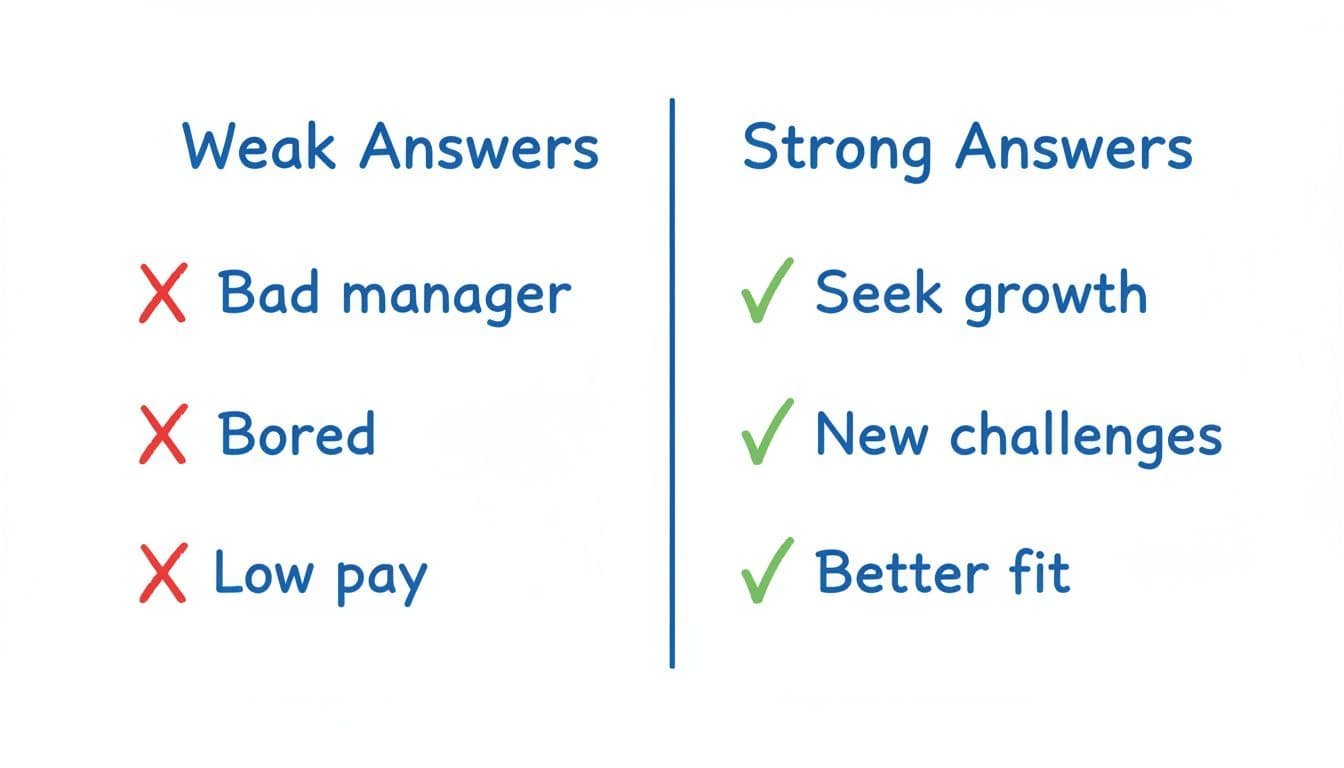
Use this quick comparison to stress-test your wording:
| Weak answer | Stronger direction |
|---|---|
| “My boss was impossible.” | “I’m looking for a team with clearer support and career growth.” |
| “I was bored.” | “I’ve learned a lot, and I’m ready for new challenges.” |
| “They didn’t pay enough.” | “I’m seeking a role with stronger career growth and responsibility.” |
The pattern is simple. Name the business reason, keep a professional manner, then shift toward the future.
A simple framework for answering “Why are you leaving your job?”
This framework helps you handle difficult interview questions during a job interview. Good answers rarely need more than 30 to 45 seconds. Start with the reason from your current job, add one line of context, then connect the move to the new job.
- State the reason in neutral language.
- Mention one positive result, lesson, or skill from the role.
- Connect your move to this opportunity.
- End with a forward-looking line.
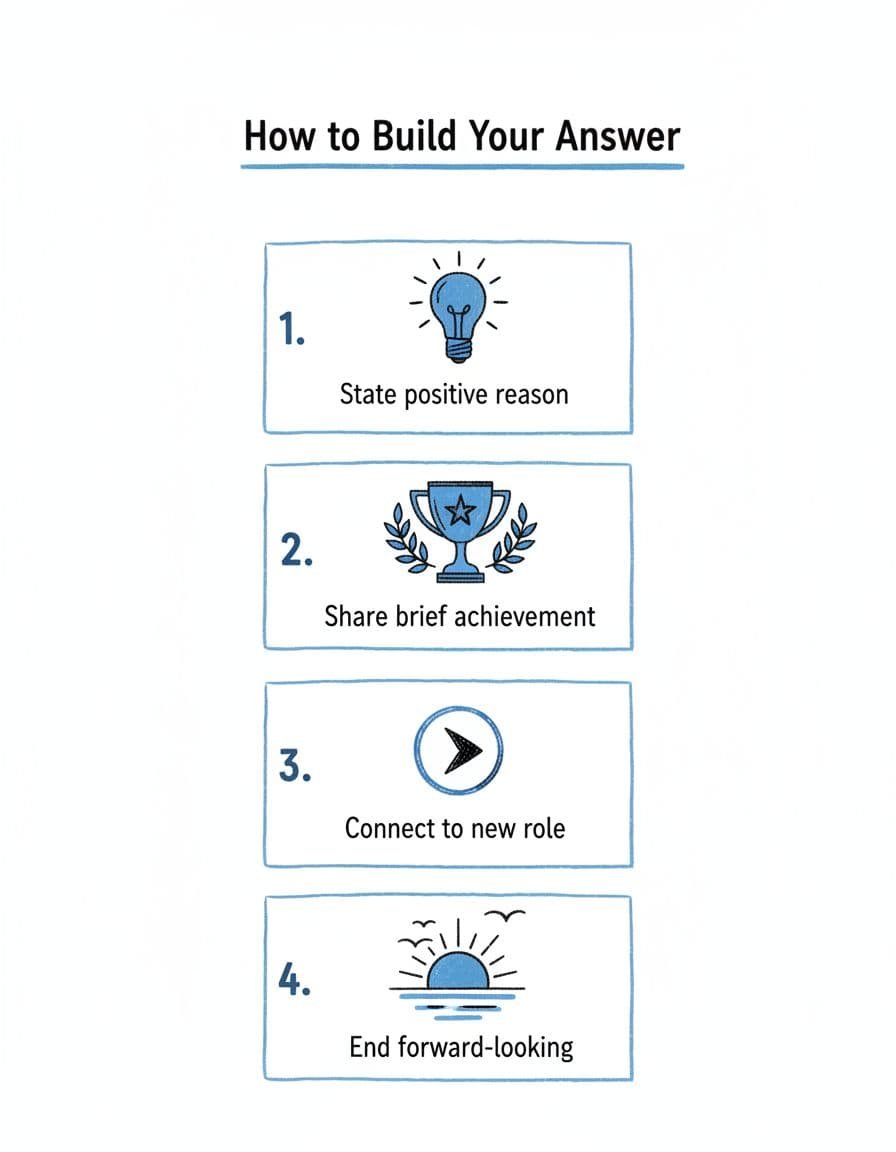
A strong version might sound like this: “I’ve had a good experience in my current job and built a strong skill set in projects. At this stage, my career goals point toward a position with more ownership and a closer match to the work your team is hiring for in this new job.”
Good answers explain the move without making the interviewer manage your emotions.
Your answer should also match the rest of your interview story. If you are preparing your best “tell me about yourself” answers for 2026 or practicing strong why work here interview answers, keep the same themes across all three. Before you rehearse, review the posting with an essential vs preferred qualifications guide. That helps you point your answer at the work this employer cares about most.
If practice is the hard part, CareerScribeAI’s Interview Prep Tools can help you rehearse short, role-specific responses. Its AI Resume Builder and Cover Letter Generator also help keep your written story aligned with what you say out loud.
Interview answer examples by situation
Use these sample answers as models, not scripts. The wording should sound like you, not like a forum post you copied at midnight.
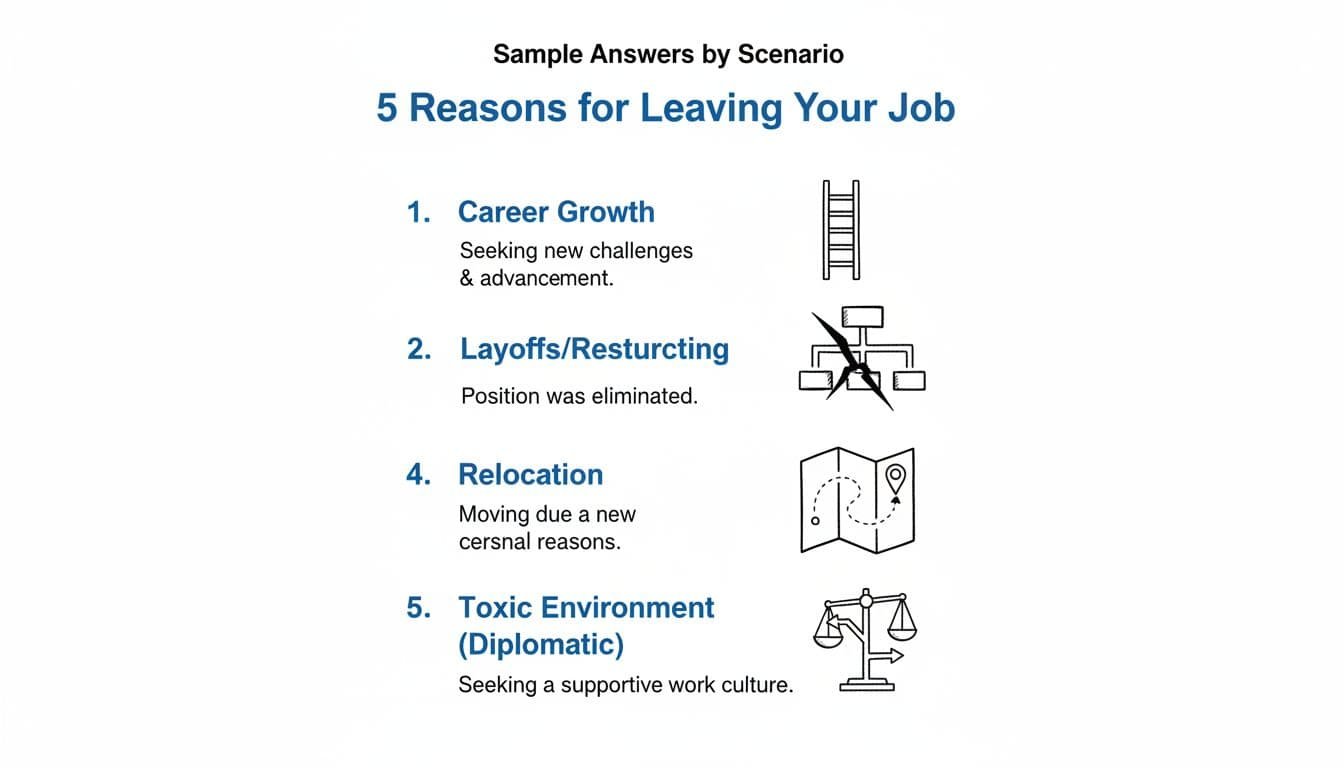
This side-by-side view helps you explain your reasons for leaving a job with sample answers that are easy to shape:
| Situation | Sample answer |
|---|---|
| Growth opportunities | “I’ve grown a lot in my current role, and I’m ready for a position with wider scope and more ownership.” |
| Lack of progression | “My team has been great to work with, but the structure is fairly flat, so advancement opportunities are limited.” |
| Company restructuring | “My role was affected by a broader company restructure. I’m proud of the work I did there, and I’m focused on the next fit.” |
| Relocation | “I’m relocating to this area for personal reasons, so I’m targeting roles where I can contribute quickly after the move.” |
| Career change | “My last role helped me build strong client and project skills. Now I’m moving into work that fits the training I’ve added in this field.” |
| Work-life balance, kept diplomatic | “I do my best work in collaborative, well-managed teams. Over time, I realized I needed an environment with clearer communication, stronger alignment, and better work-life balance.” |
After you choose a version, add one real detail. Mention a skill you built at your previous job, a kind of project you want more of, or the type of team where you do your best work. That small detail makes generic leaving job answers sound believable.
For extra phrasing ideas, these 2026 sample answers are useful reference points. Still, rewrite everything in your own words.
Frequently Asked Questions
What are hiring managers really listening for?
They test your judgment, professionalism, and fit for their role. A strong answer gives a sensible reason without drama, shows self-control, and links your move to their opportunity. Reactive or personal complaints raise red flags about future behavior.
How do I frame a tough situation like a toxic environment?
Stay diplomatic: focus on seeking collaborative teams with clear communication and better work-life balance. Highlight skills gained and connect to the new role’s positives. This keeps you sounding measured and forward-focused.
What if I’m still employed—how do I avoid sounding checked out?
Speak respectfully about your current job’s value, then explain why this transition supports your growth. Mention real skills built and projects you want more of. This shows commitment without disloyalty.
Can I mention money as a reason for leaving?
Frame it around overall opportunity, not just pay—e.g., “seeking stronger career growth and responsibility.” Hiring managers hear blame in direct complaints, so pivot to business fit. Keep it brief and tie to their role.
How do I practice these answers?
Rehearse with the framework, adapt sample answers to your story, and align with your resume and other responses. Tools like CareerScribeAI’s Interview Prep can help refine role-specific phrasing. Test against weak vs. strong comparisons for polish.
Common mistakes that make good candidates sound risky
One mistake still sinks solid applicants: badmouthing a past employer. Even when your frustration is valid, the interviewer hears blame first. Keep the focus on fit, growth, structure, or timing.
Length matters too. If your answer runs long, trim it. A hiring manager does not need your full backstory, office politics, or a detailed pay dispute. If compensation is part of your reason, frame it around the overall opportunity, not only money.
If you’re still employed, avoid sounding checked out. Speak with respect about your current job, then explain why this transition to a new job with the prospective employer supports your professional development and company culture. For harder cases, including post-termination interviews, this 2026 coaching advice on the question offers a useful reality check.
A calm answer is often the strongest answer. Respectful clarity beats a perfect script.
A hiring manager does not need every detail of your exit. They need a reason that sounds true, measured, and tied to the future.
When your answer is brief, professional, and forward-looking toward your long-term goals and future potential, “Why are you leaving your job?” stops feeling like a trap. It becomes proof that you know where you want to go next.