


Explain a career break by briefly stating why you stepped away, sharing relevant experience, and showing you’re ready for the role. Keep your opening answer around 20 to 30 seconds, then return to your qualifications.
Preparing for a career break interview can feel uncomfortable, especially after caregiving, illness, or a layoff. You can be honest without sharing private details or treating the gap as a failure.
Start with a clear explanation that puts your current readiness first.
Key Takeaways
- Give a brief, factual explanation of your career gap without apologizing.
- Connect genuine skills, projects, or earlier achievements to the employer’s needs.
- Keep your resume, cover letter, and spoken explanation consistent, then practice answering follow-up questions.
Help the interviewer understand your employment history and assess the relevant evidence of what you can contribute now.
What Hiring Managers Need to Hear
Career breaks are common. Forbes reported survey findings showing that more than half of U.S. workers had experienced an employment gap of at least one month. Nearly 60%, or 58%, had experienced a gap of six months or longer.
Those figures offer perspective, but they don’t remove every employer’s concerns. A hiring manager may want to know whether your skills are current and why this opportunity fits your plans.
Answer those questions directly. Explain your availability, describe relevant evidence, and connect your experience to the position.
You also don’t need to present every break as a period of professional achievement. Recovering your health or caring for someone can occupy all your attention. In that case, your previous work and present preparation provide strong evidence, and professional development can add to it if you’ve pursued any.
Build a 30-Second Career Break Interview Answer
Use three steps to organize your response and prepare for common interview questions. This structure works for recruiter screening calls and later interviews.
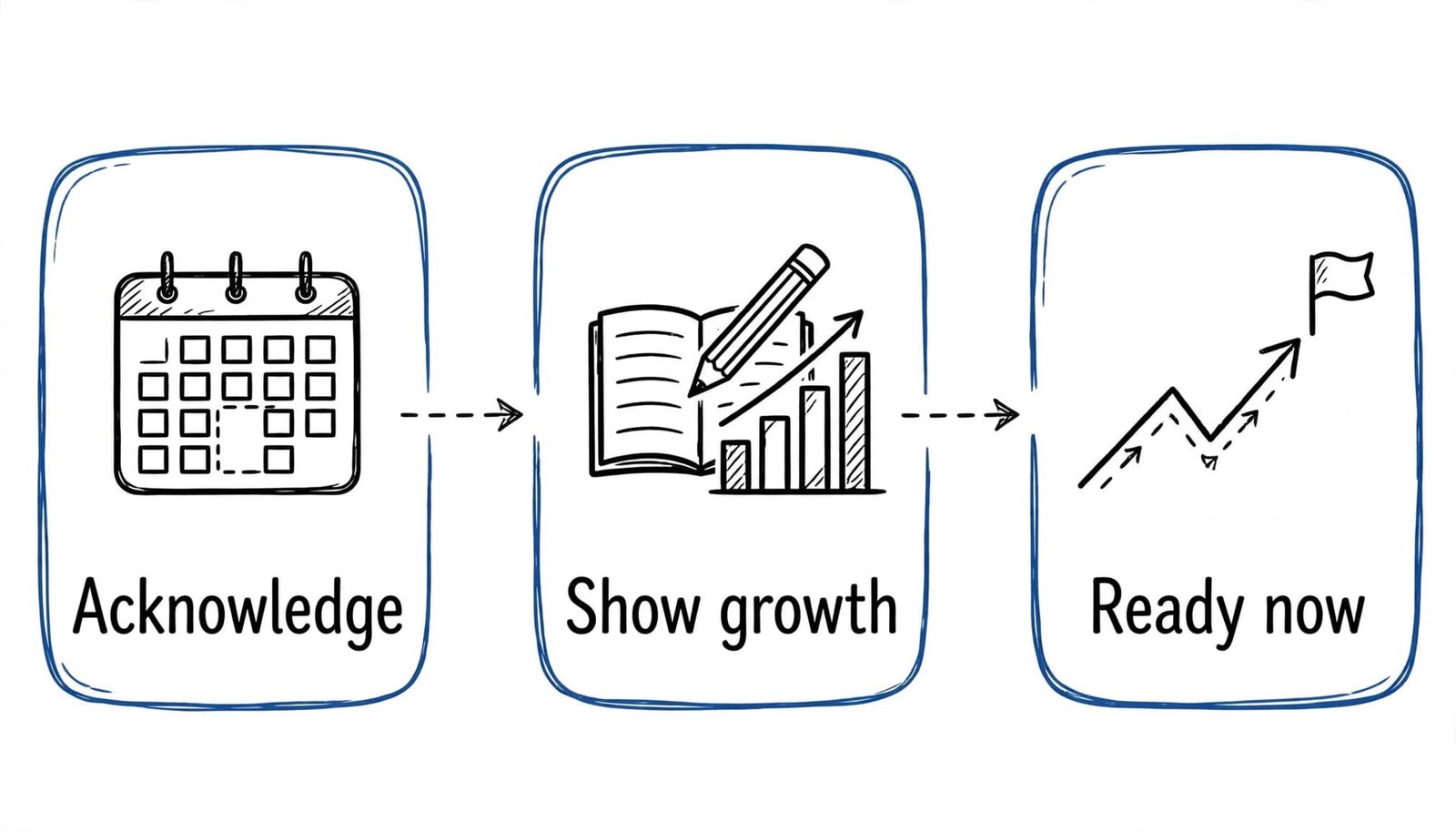
Acknowledge the break briefly
Name the reason in one sentence: family caregiving, a health-related break, redundancy, relocation, or planned study.
For example, say, “I took time away from paid work to care for a family member.”
Use neutral language. Avoid starting with “Unfortunately” or “I’m sorry,” because those words can make a straightforward explanation sound defensive.
Highlight relevant evidence
Mention a genuine skill, project, course, or responsibility that connects to the job. Explain what you did rather than claiming the break automatically made you more capable.
For caregiving, that might include coordinating appointments and handling changing priorities. For professional development, describe the project you completed, not simply the courses you watched.
Pivot to readiness for this role
Finish with why you’re returning and what you can contribute.
A caregiving answer could end: “I’ve arranged ongoing support and am ready to return. My previous operations experience fits your team’s scheduling and coordination needs.”
Only use details that are true. If your circumstances remain ongoing, describe your availability accurately.
If you didn’t study during your break, connect earlier achievements to today’s role rather than inventing professional development.
Scripts for Caregiving and Health-Related Breaks
Adapt these answers to your circumstances. Keep the reason clear, but leave private details out unless you choose to share them.
Family caregiving or parenting
“I took a career break for family caregiving. That involved coordinating appointments, managing complex logistics, and responding to urgent changes. I’m ready to return to work, and my previous administrative experience aligns with this role’s scheduling and client-support responsibilities.”
Caregiving can demonstrate time management and high-stakes problem-solving. However, connect those skills to actual responsibilities rather than assigning yourself an invented job title.
If asked about availability, explain the work schedule you can meet. You don’t need to recount your family’s circumstances.

Health-related absence
“I took time away for a health-related matter. I’m ready to return and can meet this position’s requirements. I’ve been refreshing the skills relevant to this role and would welcome the opportunity to discuss my previous work.”
Use the preparation sentence only if it’s accurate. You don’t have to disclose a diagnosis, treatment history, or medication.
For U.S. applicants, the EEOC’s disability-question guidance explains restrictions on disability-related questions before an offer. A practical boundary is: “I’d prefer to keep medical details private, but I can discuss my ability to perform the job.”
Scripts for Layoffs and Intentional Career Moves
Different situations need different explanations. Make the reason understandable, then address any concern about your fit.
Layoff or redundancy
“My position was eliminated during a restructuring. Since then, my job search has focused on finding a role that matches my experience while I strengthen my project-management skills. This position interests me because it combines coordination with stakeholder communication.”
If you’ve completed consulting projects, name the work. If you’ve earned a Salesforce Administrator certification or Google Project Management Certificate, mention it where relevant. Don’t describe coursework as a certification you haven’t earned.
During a recruiter call, give the explanation once, then move to qualifications and availability.
Moving into a less senior position
“After my role was eliminated, I decided to focus on hands-on coordination rather than people management. I’m interested in this coordinator position because I enjoy organizing delivery and supporting a team. The responsibilities match the work I want to do next.”
This addresses the employer’s possible concern that you’re overqualified or will leave quickly. Explain your interest in the actual duties.
Avoid saying you’ll take anything. Instead, discuss why the scope and level suit your plans.
Relocation or a planned career pivot
“I took time away to relocate and establish myself locally. I’m now available for work and targeting positions where my previous customer-service experience is useful.”
For a career pivot, replace the relocation explanation with your real reason and preparation. Mention completed training or a relevant project if applicable.
Don’t claim every part of the break was intentional if circumstances changed. A truthful account remains easier to explain under follow-up questions.
Keep Your Resume and Interview Explanation Consistent
Your documents should make the conversation easier, not raise new questions about your dates.
Choose a clear employment-history format
Years-only dates can reduce emphasis on short gaps, as long as they don’t imply continuous employment. Provide exact months when an application requests them.
For a long absence, a dated “Career Break: Family Caregiving” entry can clarify a resume gap and the timeline. For multiple gaps, distinguish contract endings, layoffs, and personal absences rather than combining unrelated periods.
A skills-first or combination resume can bring relevant strengths forward. CareerOneStop’s resume guidance recommends a skills section for significant gaps, frequent job changes, or contract work.
However, keep your employment history clear. ATS products and employer settings vary, and no format guarantees that a gap won’t matter.
Match your documents to your spoken answer
Our AI Resume Builder can help organize your experience and tailor relevant achievements to the posting. Keep dates accurate, and accept only wording you can support in an interview.
For a significant break, add a brief explanation to your cover letter, then emphasize job fit. Our Cover Letter Generator can help draft that connection using your resume and the position.
Keep the reason and timeline consistent across your resume, cover letter, application form, and interview. Never extend employment dates or present occasional unpaid help as continuous paid work.
Practice Your Answer and Handle Follow-Ups
Good interview preparation helps you sound comfortable without memorizing a speech. Rehearsing also shows where your answer needs clearer evidence.
Rehearse the short answer and one deeper example
Practice your explanation aloud before a job interview and time it. Aim for 20 to 30 seconds, then prepare a longer answer if the interviewer asks for detail.
Our Interview Prep Tools use your resume and the job posting to suggest likely questions. Edit every draft before rehearsing it.
For questions about skills, use STAR: Situation, Task, Action, Result. Prepare one example that demonstrates a relevant strength. Earlier work experience is valid evidence, even if your break contained no formal projects.
Respond to concerns without becoming defensive
For “Why return now?”, explain your genuine motivation and availability: “I’m ready to resume paid work, and this role matches my experience.”
If asked whether your skills are current, name recent preparation or explain a task you can perform. Avoid an unsupported “I’ve kept up with everything.”
Don’t criticize former employers, overshare family details, or fill silence with repeated apologies. Also avoid vague promises about staying forever. A clear explanation of your interest in the duties is more credible.
Frequently Asked Questions About Career Break Interviews
How do I explain returning after a long absence?
When you return to work, state the reason and duration, then focus on preparation and relevant experience. A longer break may require more evidence of current skills, but it doesn’t require a longer personal explanation.
You could say: “I spent several years caring for my family. I’m now returning to paid work and have refreshed the tools this role requires.”
Follow with a real example. If you haven’t refreshed those tools yet, don’t use that sentence. Describe your existing strengths and the preparation you’ve completed instead.
How can a 30-60-90-day plan help a returner?
A 30-60-90-day plan outlines your proposed priorities during the first three months. It gives you a concrete way to discuss contribution after a break.
For example, propose learning systems during the first month, taking ownership of routine tasks by day 60, and contributing independently by day 90.
Harvard Business School’s first-90-days guidance emphasizes planning early priorities. Keep your proposal realistic and adapt it to the employer’s onboarding process.
Explain the Break, Then Show Your Readiness
A strong answer is brief, truthful, and connected to the job. Your personal explanation only needs enough detail to make your timeline understandable.
Choose the wording that fits your circumstances, then rehearse it aloud. Let evidence of readiness and your relevant experience carry the rest of the conversation.