


You got the job offer, then the starting salary landed a little flat. That moment can feel awkward, but it doesn’t have to.
A strong email gives you time to think, pick the right words, and keep a written record. In 2026, the hiring manager still expects you to negotiate salary, but responds best to a clear ask backed by value. These salary negotiation email templates and counteroffer scripts will help you ask for more without sounding stiff or combative.
What a strong salary negotiation email needs in 2026
The salary negotiation process looks a bit different now. Many employers share salary ranges, yet budgets are tighter and approvals move slower. So your note to the hiring manager has to be short, calm, and well supported. For broader market context, see these job offer salary negotiation tips for 2026.
Before you write, lock down three numbers: your target, your minimum acceptable salary, and your walk-away point. Then gather proof. Use salary benchmarks, average salary data reflecting market value and industry standards, role scope, and your most relevant results.
This quick table shows the parts that matter most.
| Part | What to include | Why it works |
|---|---|---|
| Appreciation | Thank them, show interest | Keeps the tone warm |
| Clear ask | One exact number | Reduces back-and-forth |
| Proof | Results, scope, market data | Links pay to value |
| Flex points | Bonus, equity, review date, compensation package, benefits package | Creates room to agree |
The best support usually comes from your own track record. If your wins still sound vague, CareerScribeAI’s AI Resume Builder can help turn duties into measured outcomes, and its Interview Prep Tools can help you say the same story out loud to build a value-based case for more pay. If you’re still sorting which parts of the role matter most, this guide to must-have vs. nice-to-have job skills is a practical starting point. A clean resume also helps when title or level is part of the discussion, so this Lever ATS one-column resume template can be useful before final interviews.
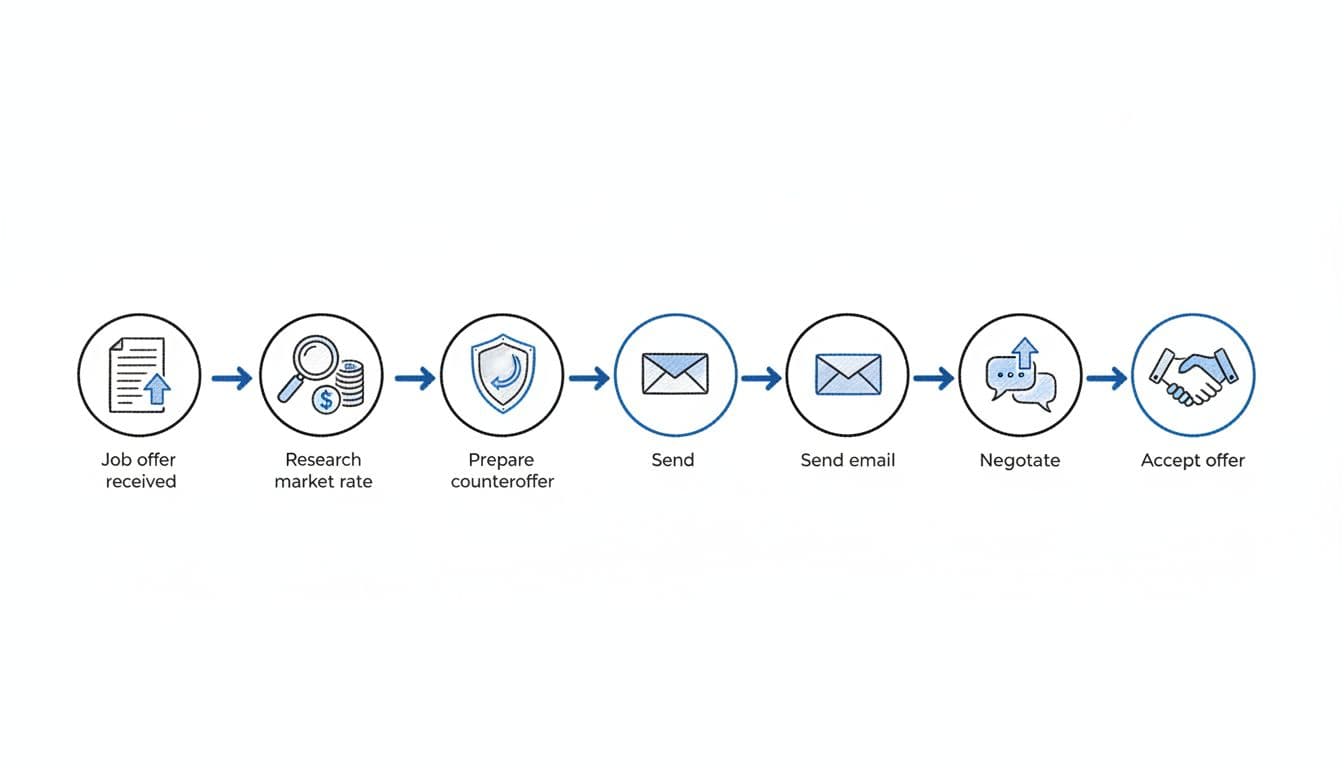
One more tip, don’t send your counter five minutes after reading the offer. Take a beat, confirm your number, and reply within one business day if possible.
Salary negotiation email templates you can adapt
Most winning counter-offer emails follow the same shape. Thank them, show interest, make the ask, support it, and close on a positive note. Think of it like a five-part frame for your counter-offer template. It keeps emotion low and clarity high.
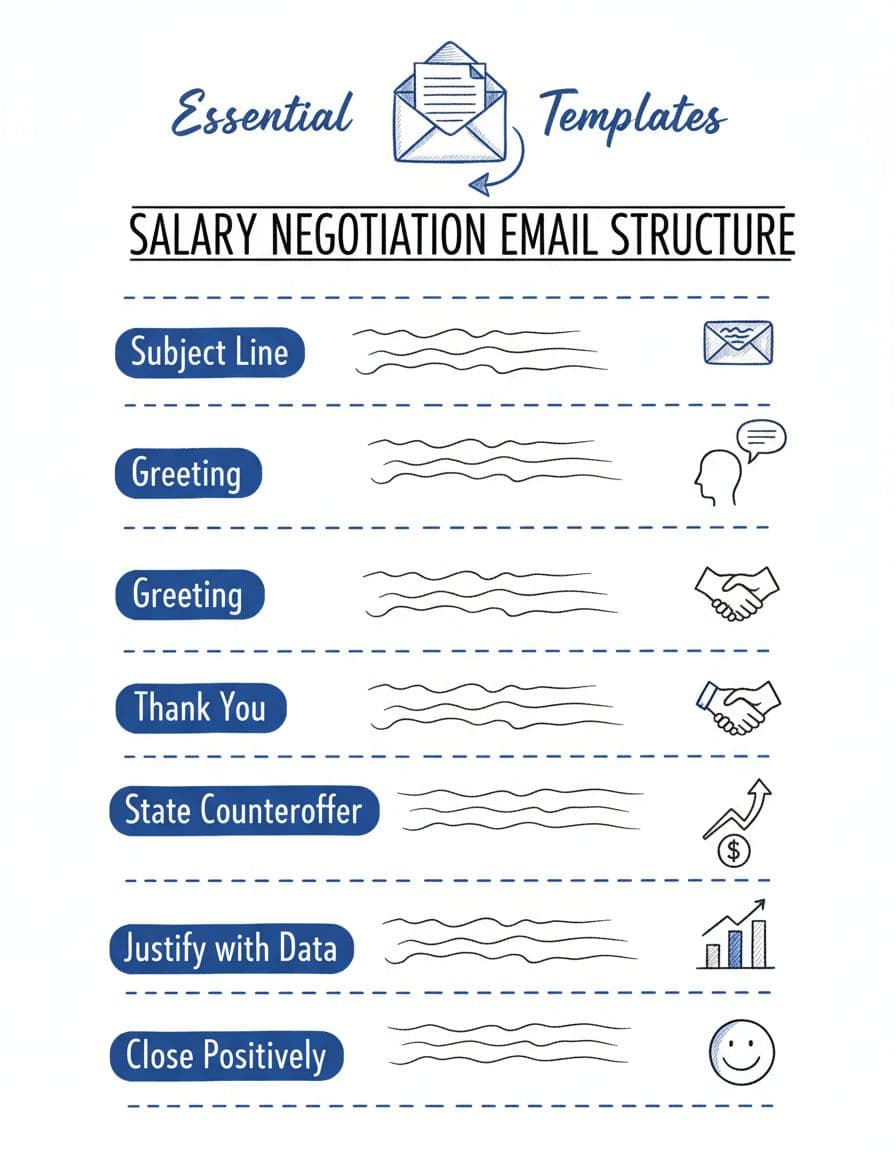
Template for a lowball job offer
Subject: [Role Title] Job Offer
Hi [Name],
Thank you again for the offer. I’m excited about the role and the chance to join the team. Based on the scope of the position, my experience in [field], and current market ranges, would you be open to a base salary of [X] as my starting salary? If we can get closer to that number, I’d be happy to move forward quickly.
Best,
[Your Name]
Template when the salary band seems fixed
Subject: Compensation Discussion for [Role Title] Job Offer
Hi [Name],
Thank you for the offer. I’m very interested in the role. I understand the base salary may sit within a set range. If the base salary can’t move to [X], would the team be open to a signing bonus of [Y], additional equity, or a six-month compensation review? I’d love to find a package that reflects the value I’ll bring.
Best,
[Your Name]
Ask for one clear number, not a range. A range gives the employer the low end.
Template when you need more time before accepting
Subject: [Role Title] Offer Timeline
Hi [Name],
Thank you for the offer. I’m excited about the opportunity and want to review the full package carefully. Could I have until [date] to respond? I’d also welcome a quick call to discuss compensation and start date before I finalize my decision.
Best,
[Your Name]
If you want more examples for bonus, title, or benefits, these counter offer email templates are a useful reference.
Counteroffer scripts for recruiter replies
Once you send the email and receive a verbal job offer, the reply may come by phone from the recruiter. Don’t improvise. Short scripts work better than long speeches because they keep the conversation focused.
If the recruiter asks, “What number did you have in mind?”
Say: “Based on the role scope, my experience, and market data, I’m targeting [X]. I’d feel comfortable accepting at that level.”
If the recruiter says, “That’s the top of our range”
Say: “I understand. If base salary is capped, could we look at a sign-on bonus, added equity, flexible working hours, remote work options, or an earlier performance review tied to career progression?”
If they move, but not enough
Say: “I appreciate the movement. If the hiring manager can bring the base to [X], or add [Y], I’m ready to sign.”
After that, stop talking. Silence can feel strange, but it gives the recruiter or hiring manager room to work.
If you need a confidence check on your target, this salary comparison tool is helpful for grounding your ask in market logic. CareerScribeAI’s Interview Prep Tools can also help you rehearse these lines so your email, phone call, and final decision all match.
Know when to wrap it up, too. If the final offer meets your floor and the role still fits your goals, accept clearly and fast. If it doesn’t, decline with respect. A good negotiation protects your income, but it also protects your judgment.
In the end, the goal isn’t to sound tough. It’s to sound prepared. Use these templates to effectively negotiate salary, as a foundation for your counter offer or even a salary increase letter for existing employees, choose one firm number, and make your counter offer easy to say yes to.