


Most job seekers lose the reply before the first sentence ends. In 2026, recruiters skim faster, spot copy-paste outreach fast, and ignore anything that sounds mass-produced.
The fix is simple, but not easy. LinkedIn recruiter messages work when they feel human, prove fit quickly, and ask for one low-friction next step. A strong message reacts to a specific job posting to provide better context.
If your outreach feels more like a door knock than a speech, your odds improve fast.
Key Takeaways
- Personalize fast: Open with a specific job, post, or shared connection recruiters can verify, then hit one concrete result tied to the role.
- Keep it short and human: Ditch mini cover letters—structure as context + proof + simple ask to make replying effortless, not impressive.
- Warm up first: Comment on posts or follow before messaging to avoid random vibes; follow a Day 0, 7, 14 cadence for higher replies.
- Templates as jackets, not uniforms: Swap in real details for any role, InMail or free messages—clarity beats cleverness every time.
Why most LinkedIn recruiter messages fail in 2026
Talent acquisition professionals are dealing with heavier application volume, more AI-polished resumes, and more low-signal outreach. So they don’t reward effort alone. They reward relevance.
That matters because many job seekers still send messages that read like mini cover letters. They go long, sound vague, and ask for too much too soon. A personalized message is the antidote to those AI-polished resumes. As Expandi’s recruiter message guide points out, context beats cleverness, and clarity beats curiosity.
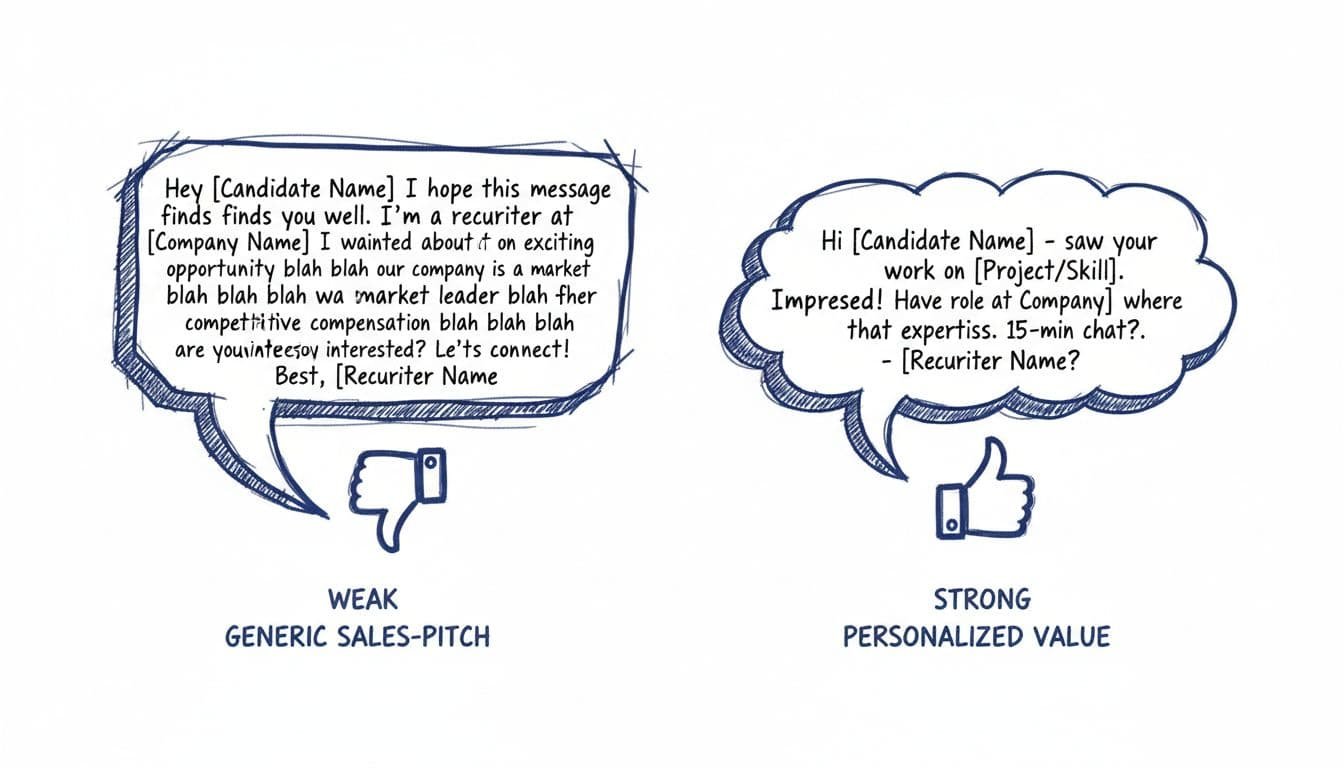
This quick comparison shows where replies usually live:
| Part | Gets ignored | Gets replies |
|---|---|---|
| Opening | Generic intro | Mentions a role, post, or shared link |
| Body | Long personal history | One or two proof points tied to the job |
| Ask | “Can we chat sometime?” | Easy yes or no next step |
The takeaway is clear. Short wins when it carries real signal.
Another 2026 shift matters too. Corporate recruiters want signs you’re a real person, not a polished bot. That means a good message may mention a project, a hiring update, or a team post you saw. It can also mention human skills, like learning speed or team communication, as long as you tie them to results.
Before the job seeker sends anything, warm the ground a bit as part of a broader professional networking approach. Comment on a team post, follow the recruiter, or react to a company update. That tiny touch makes your message feel familiar instead of random.
The structure that makes recruiter outreach feel worth answering
When you craft a message for outreach, think of it like a movie trailer. Your job isn’t to tell the whole story. Your job is to make the next step feel obvious.
As part of a successful networking strategy, a strong recruiter message usually follows four moves:
- Open with context they can verify fast.
- Show fit with one concrete result.
- Tie that result to the role or team.
- End with one simple call to action.
Your message isn’t a mini resume. It’s a highlight of your candidate profile, a reason to reply.
Here are opening lines that work well in LinkedIn networking and job search messaging, such as mentioning the specific job title:
- I saw you’re hiring for the Senior Analyst role on the growth team.
- Your post about scaling customer onboarding caught my eye.
- We both came through the same university program, so I wanted to reach out.
- I noticed you’re hiring for a product marketing role that matches work I’ve done in B2B SaaS.
Then add proof. One sentence is enough. For example, “In my last role, I cut onboarding time by 18% and built the playbook the team still uses.”
To find the right proof point, pull apart the posting first. This guide to must-have vs nice-to-have job skills helps you choose what to mention, instead of stuffing every skill into one note.
If your resume still reads like duties, fix that before outreach. CareerScribeAI’s AI Resume Builder can tighten bullet points around results, its Cover Letter Generator can help if a recruiter asks for added detail, and its Interview Prep Tools help you keep your message, resume, and interview stories aligned. Also, if you expect to send a resume right away, use this 2026 Lever ATS resume format guide as a quick parser check.
Recruiter outreach message templates you can customize
Don’t copy these outreach templates word for word. Use them like a jacket, not a uniform. Swap in personalized variables to make each message template feel tailored.
These work whether you’re burning InMail credits via Recruiter Lite, using standard messaging, or reaching open profiles to send without credits. If you’re a technical recruiter targeting software engineers, the same principles apply.
If you’re sending InMail, these subject lines are clean and easy to scan:
- Quick question about the [Role Title] opening
- Background match for your [Team Name] role
- Reaching out about the [Role Title] position
Use message templates like these:
- Hi Maya, I saw you’re hiring for the Content Strategist role. I’ve spent the last three years building SEO content for B2B software teams, and I grew non-brand traffic by 41% in my current role. If it’s helpful, I’d love to share a resume and ask one quick question about the role’s top priorities.
- Hi Jordan, your post about hiring account managers for the mid-market team stood out. I manage a $1.8M book of business now and improved renewal rate by 9% last year. If the role is still open, would you be open to pointing me to the right next step?
- Hi Elena, we both came from State U, so I wanted to say hello. I noticed you’re recruiting for data roles (or software engineer spots if that’s your focus), and my recent work in SQL reporting and dashboard automation lines up well with one of your openings. A referral from a mutual connection got me excited too. Would it be okay if I sent over my resume for a quick look?
Follow-up message cadence for higher response rates
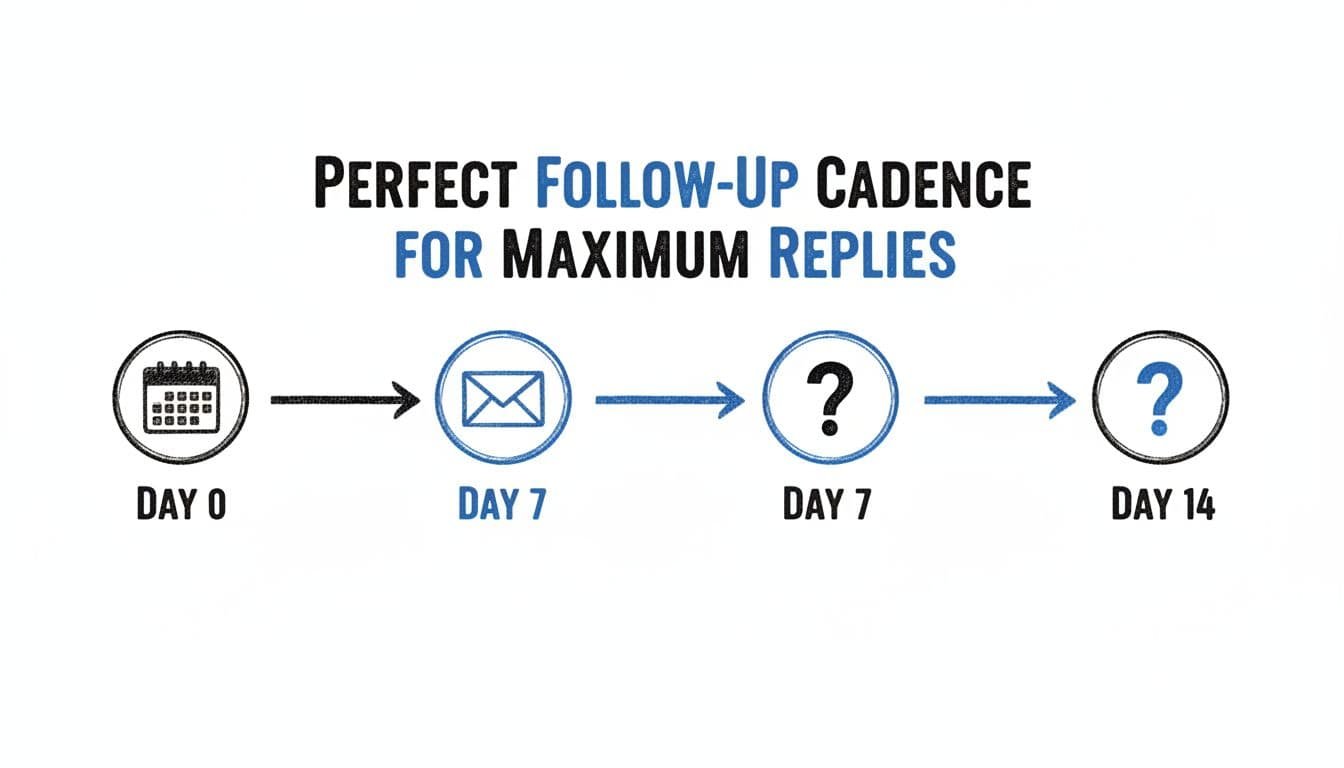
Now the follow-up message, where many people ruin a good first outreach by pushing too hard. A structured approach like this improves your response rate.
Send the first message Tuesday through Thursday, early in their time zone (or try a connection request as an alternative). If you hear nothing, follow up in 7 to 10 days. Keep that follow-up message under 40 words. If there’s still no reply, one more touch around day 14 is enough. After that, move on.
A clean follow-up message sounds like this: “Hi Maya, circling back in case the role is still active. My background in lifecycle content and lead-gen SEO seems closely aligned. Happy to send details if useful.”
That low-pressure style matches the advice in these LinkedIn InMail examples that get replies. One message, one ask, one easy answer.
The best LinkedIn recruiter messages don’t try to impress. They try to make replying easy. This fits into your larger job application process and can shift your career trajectory.
Pick one job today. Find one real match point, write one short note, and send it. That’s effective communication, the best way to reach out to recruiters, and how more replies start.
Frequently Asked Questions
How long should LinkedIn recruiter messages be?
Aim for 3-5 sentences max, under 100 words. Recruiters skim, so pack context, one proof point, and a low-friction ask. Long messages get ignored like generic blasts.
What’s the best structure for a message that gets replies?
- Context (job/post mention). 2. Fit (one result). 3. Tie to role. 4. Simple CTA like ‘resume + quick question?’. This trailer-style hook makes next steps obvious.
When and how often should I follow up?
Send initial Tuesday-Thursday, early in their timezone. Follow up Day 7-10 (under 40 words), then Day 14 max. Low-pressure keeps you top-of-mind without annoying.
Should I send my resume with the first message?
Only offer it as an easy yes/no ask, like ‘Happy to share if helpful.’ Attaching unasked screams mass outreach. Let them request for better flow.
Do these tips work for InMail or technical roles?
Yes, same principles for InMail (clean subjects like ‘Quick [Role] question’), Recruiter Lite, or open profiles—even software engineers. Personal fit trumps credits spent.