

An employment gap in your work history can feel like a blank page that prompts questions from hiring managers, who will fill it in with worst-case guesses. The good news is that in 2026, gaps are common, and recruiters mostly want one thing: a clear, believable timeline.
If you’re addressing an employment gap or career break, your goal isn’t to “spin” anything. It’s to give a short, steady explanation that matches your dates, supports your skills, and makes it easy to move on to your strengths.
This guide gives you five honest formats that work well today, plus copy-ready sample lines you can paste into your resume without setting off alarm bells.
What hiring teams in 2026 actually want to see (and a simple process)
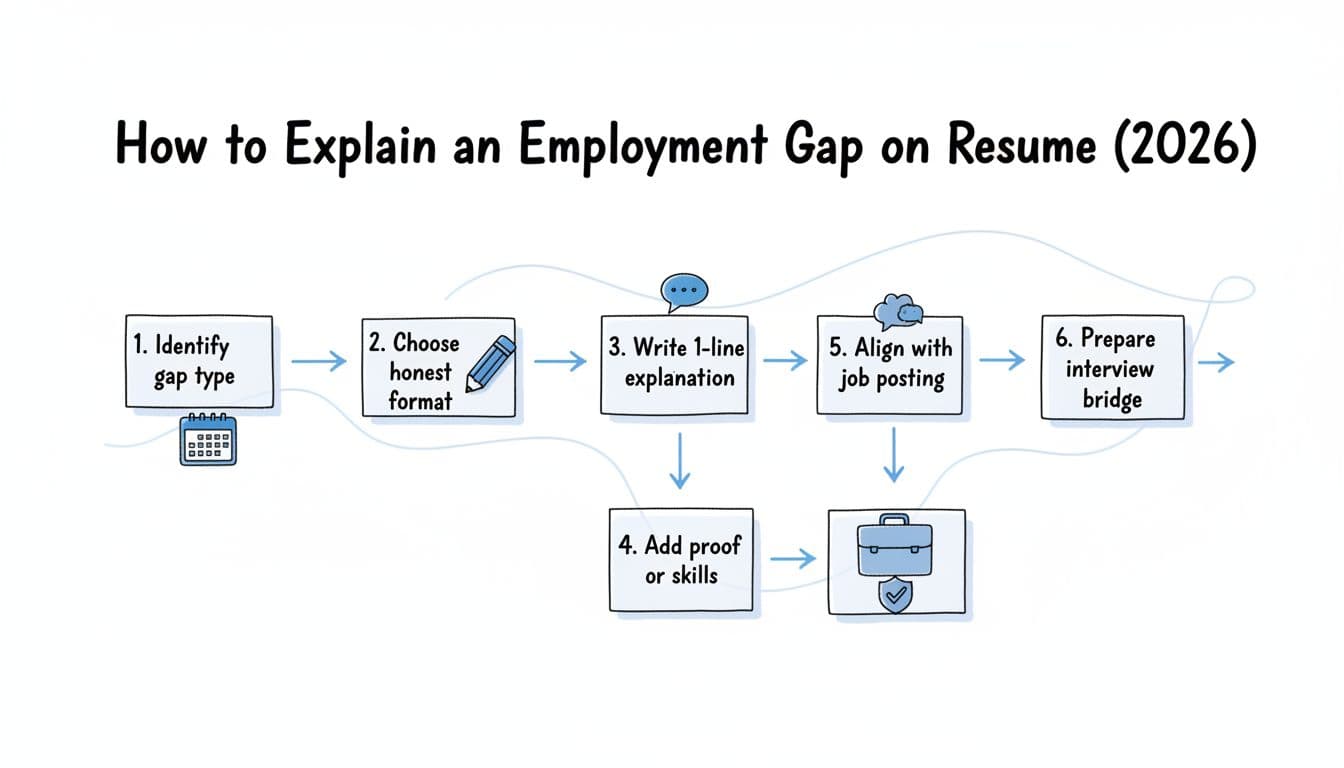
Flowchart showing a clear step-by-step method for explaining an employment gap, created with AI.
Think of an employment gap like a missing puzzle piece. Hiring managers don’t need your life story, they just need that piece to fit. A solid gap explanation usually has three traits: it’s brief, it’s specific enough to be believable, and it points forward to the role you want now.
A practical 2026 process (keep it tight):
- Identify the gap type (layoffs, parental leave, caregiving, school, health, relocation, travel, contract work).
- Pick an honest format (you’ll see five below).
- Write a brief explanation that covers dates plus reason at a high level.
- Add proof of momentum (coursework, upskilling, projects showcasing transferable skills, volunteer work, freelance results).
- Match the job posting (use similar terms for tools and responsibilities).
- Prep an interview bridge statement (one sentence that connects the gap to your return).
If you want a second set of eyes on how this reads, university career centers often share practical guidance, like the University of Arizona’s overview on explaining employment gaps on a resume.
To speed up the writing during your job search or career transition, tools like CareerScribeAI’s AI Resume Builder can help format a “Career Break” entry cleanly and keep wording ATS-friendly, especially for any employment gap. Then use the Cover Letter Generator to add one extra sentence of context only when it truly helps.
Five honest gap formats that don’t raise flags (with copy-ready sample lines)
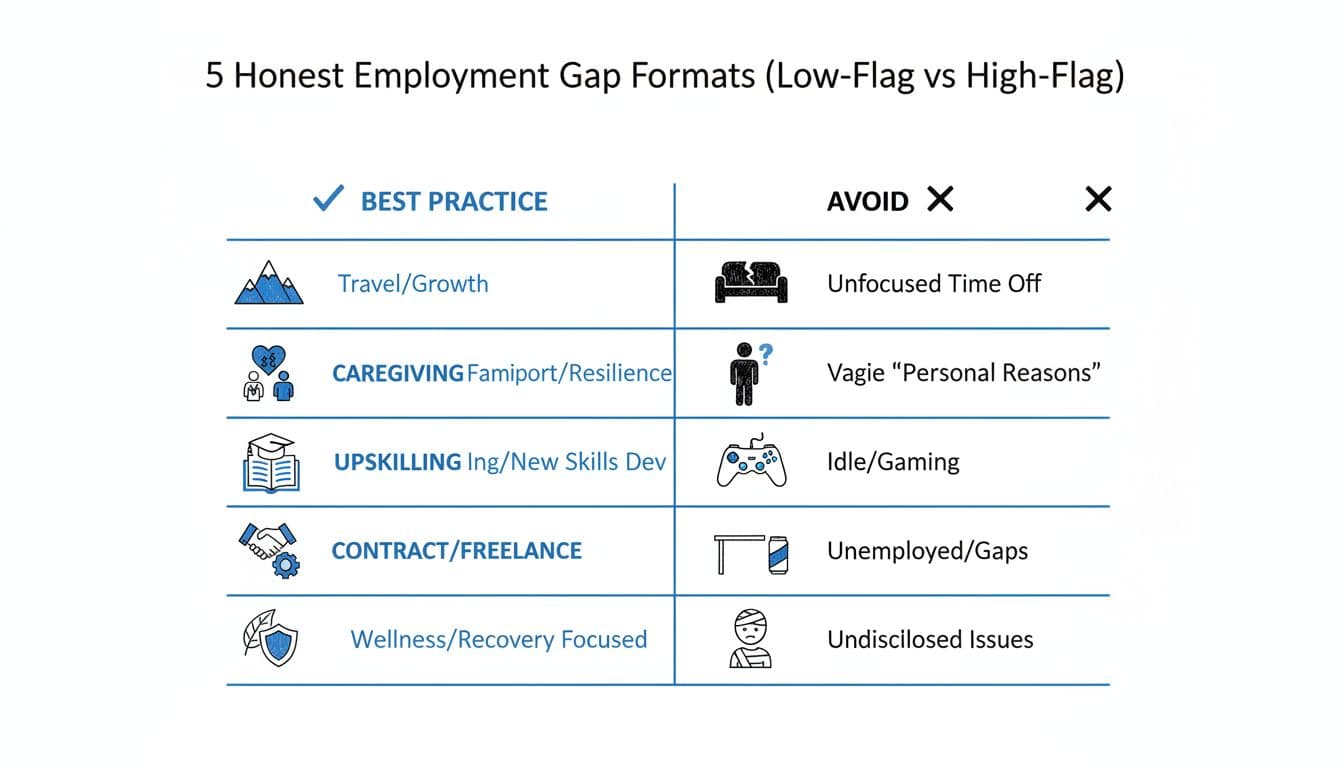
Side-by-side examples of low-flag vs high-flag gap wording, created with AI.
Visual spot: This is a strong place to insert a comparison infographic (low-flag vs high-flag wording for employment gaps), especially if you’re sharing this advice with a friend or career coach.
Before the formats, one rule: don’t “over-explain.” A resume is not a diary. If the reason is sensitive, keep it general and shift focus to skills and readiness. These are resume gaps in employment examples that won’t raise red flags.
Format 1: Career break (planned sabbatical or reset)
Use when you chose to pause work, and you can point to something productive you did.
Sample lines:
- Career Break (Sabbatical), Jun 2024 to Jan 2025, planned time off; completed Google Data Analytics coursework and built two portfolio projects.
- Career Break, 2024, personal sabbatical; returned ready for full-time roles and actively refreshed industry tools.
Format 2: Caregiving or Parental Leave (family or dependent support)
Hiring teams see this often. Keep it direct, no details required.
Sample lines:
- Family Caregiving Leave, Mar 2023 to Nov 2023, full-time caregiving; maintained skills through weekly practice projects in Excel and Power BI.
- Caregiving Career Break, 2024, supported a family member; now available for full-time work and steady schedules.
Format 3: Upskilling or Professional Development (courses, certifications, bootcamps)
This works best when the training is relevant to the job you’re applying for.
Sample lines:
- Professional Development, Sep 2024 to Feb 2025, completed CompTIA Security+ and rebuilt home lab for hands-on practice.
- Education Break, 2024, finished a UX certificate and produced a three-case-study portfolio.
Format 4: Contract, freelance, or independent work (even if it was light)
If you did paid work, name it. Don’t hide it. List it like real experience.
Sample lines:
- Freelance Project Work, 2024, delivered social content and email campaigns for two small clients; improved open rates by 18%.
- Independent Consulting, May 2023 to Dec 2023, short-term client projects while seeking the right full-time role.
Format 5: Personal Leave (health or personal reasons, keep it high-level)
You’re not required to share medical details. Keep it simple and forward-looking.
Sample lines:
- Medical Leave, 2024, addressed a health matter; fully cleared to return and currently interviewing for full-time roles.
- Personal Leave, Jun 2024 to Oct 2024, time away for personal reasons; stayed current with industry updates and tools.
Here’s a quick “best practice vs avoid” reference you can screenshot with one-line explanations:
| Employment gap format | Best-practice one-line explanation | Avoid (raises flags) |
|---|---|---|
| Sabbatical | Planned break + skill or output | “Took time off, not sure what’s next” |
| Caregiving | Caregiving + readiness now | Long emotional explanation |
| Upskilling | Specific training + relevance | Vague “online classes” |
| Contract/Freelance | Concrete work + outcome | Calling paid work “a gap” |
| Health/Personal | High-level + cleared/ready | Sharing private details |
For more mainstream perspective on how recruiters view gaps, LinkedIn also covers the topic in how to explain resume gaps in 2026.
Where to place the employment gap on your resume so it reads clean in ATS
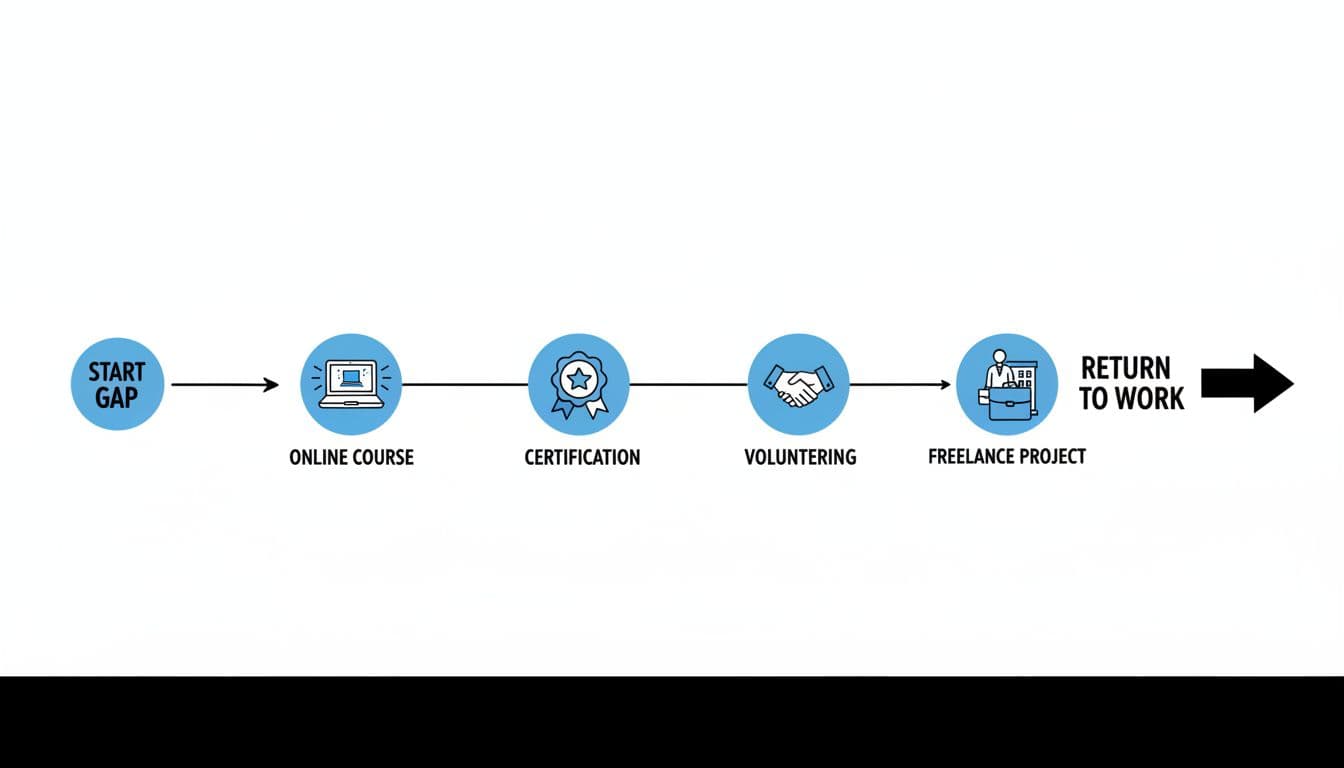
Timeline showing productive activities during a 12 to 24-month break, created with AI.
Visual spot: A simple chronological timeline works well here, especially for a 12 to 24-month employment gap with training, volunteer work, or freelance projects.
In 2026, most applicant tracking systems and recruiters still prefer a reverse-chronological structure. That doesn’t mean you must “hide” the gap. It means you should make the timeline easy to follow, maintaining reverse chronology.
Three placement options that usually work:
- Add a “Career Break” entry in Experience with dates (month/year). This is the cleanest for ATS because it preserves chronology.
- Use a short note in a professional summary only if the gap is recent and large (example: “Returning to the workforce in marketing after a 2024 caregiving break; recent HubSpot email projects included.”).
- Group short contracts under one heading like “Independent Work” with a date range, then bullet 2 to 4 outcomes under it.
Avoid fuzzy date formats like “2024 to present” if you stopped in 2024. Also avoid leaving blank years if the gap is long. When dates disappear, trust disappears.
CareerScribeAI’s AI Resume Builder can help you format a gap entry so it doesn’t look like a “job,” while still reading correctly in ATS scans. If you think the gap needs context, the Cover Letter Generator is a better place for one extra sentence, since it won’t clutter your experience section.
Turn your gap line into a calm interview answer
A strong resume line should become a simple spoken answer with positive framing. Aim for a brief explanation of 15 to 25 seconds, then pivot to the value you bring now.
Use this pattern: What happened + what you did + why you’re ready.
Examples:
- “I stepped away in 2024 for family caregiving, and I kept my skills current with weekly analytics projects. I’m ready for a full-time role and excited about this team’s reporting needs.”
- “After a layoff, I took six months to complete online courses and build a portfolio project. I’m now focused on returning in a role like this.”
- “I handled a personal matter last year, it’s resolved, and I’m fully available. I’ve been sharpening my skills in X and Y, which match your posting.”
- “I pursued an entrepreneurial venture in 2023, which built my leadership skills, and now it’s complete. I’m eager for this career transition.”
To practice without overthinking it, CareerScribeAI’s Interview Prep Tools can help you rehearse a consistent employment gap explanation and keep it aligned with the job description. If you want more general interview framing tips, FDM also shares tips to explain employment gaps that translate well to interviews.
Conclusion
An employment gap or career break doesn’t have to be a problem; it just needs a clean label and a professional story. Pick one honest format, keep the explanation short, add proof of skill, and rehearse a steady interview bridge. While this guide focuses on chronological layouts, some might consider a functional resume format if the gap is extreme, though chronological is usually better.
When your employment gap resume reads like a complete timeline, recruiters stop guessing and start assessing your fit. Head into your job search with confidence.