


A 30 to 90-day job can feel like a stain on your work history, even when it shouldn’t. Maybe it was a contract that ended, a new role that got reorganized, or a “not what they promised” situation. Now you’re staring at your 30-90 day job resume and thinking, “If I list it, I look flaky. If I don’t, I look like I’m hiding something.”
The good news is you usually have more control than you think. Hiring managers don’t panic at short stints. They panic at confusion, missing context, and vague bullets that sound like you barely did anything.
This guide breaks down when to include a 30 to 90-day job, how to format it, and what to remove so it doesn’t take over your story.
Decide if the 30–90 day job belongs on your resume
Think of your resume like a movie trailer, not the full film, especially if you are a career changer. It should show enough to build trust and interest, without lingering on scenes that don’t help.
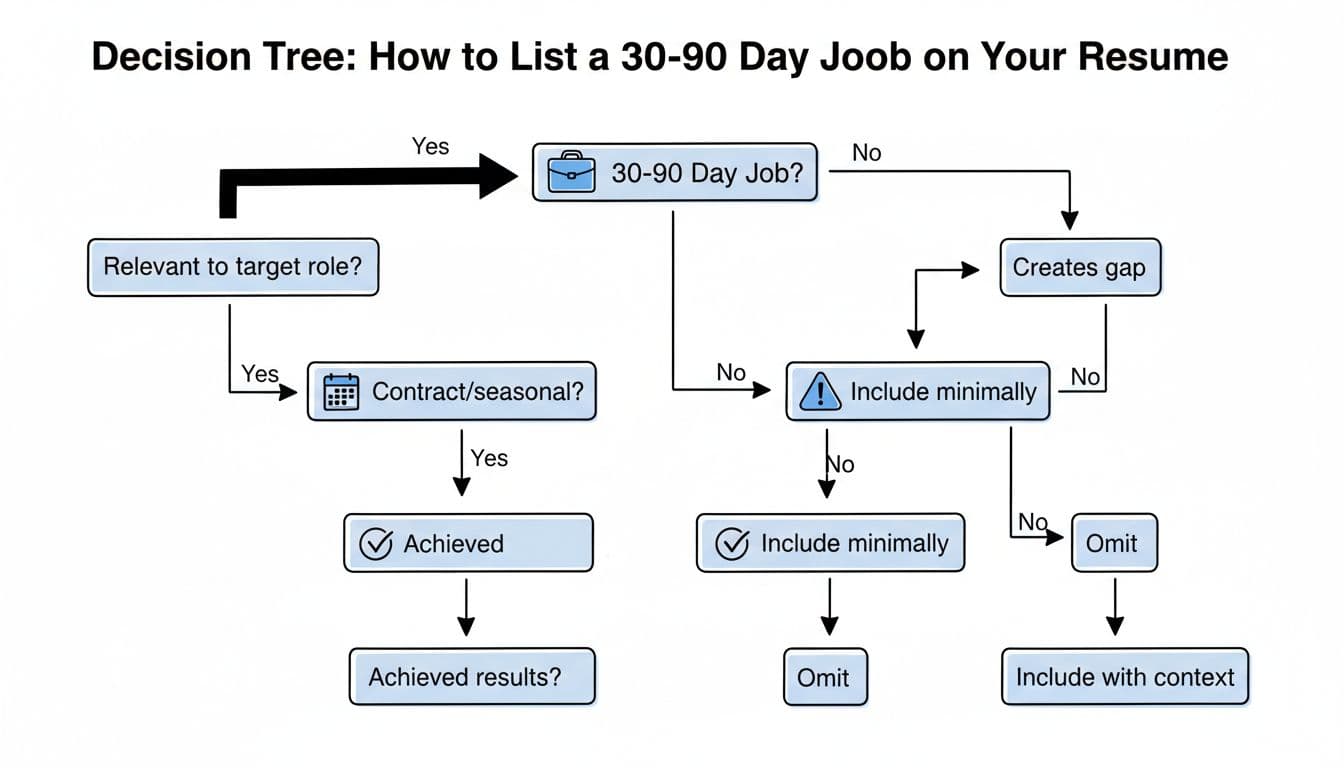
Include the role if at least one of these is true:
- It’s relevant to the job you want next (matches the job description with same tools, same function, same industry).
- It was clearly temporary (contract, seasonal, internship, project role).
- You produced a measurable outcome (fixed something, shipped something, improved something, or demonstrated soft skills).
- Removing it would create a noticeable gap that raises more questions than the short stint itself.
You can often omit it if all of these are true, particularly if the company culture was not a good fit:
- It’s unrelated to your target role.
- You were there only a few weeks and didn’t complete meaningful work.
- You have plenty of stronger, recent experience that keeps your timeline clean.
One practical detail: labeling helps. If it was a contract role, say so in the title line for your new role. That single word can reset assumptions. For more examples of how people label temporary roles (without sounding defensive), see The Muse’s guidance on listing temporary jobs.
If you’re worried about a “job hopping resume” impression, remember this: one short stint is an asterisk, a pattern is a headline. Your job is to keep it from becoming the headline.
Use formatting that keeps short stints from stealing attention
How you present a short-term job on resume matters as much as whether you include it. The goal is to make it look normal, not loud.
Best-practice template layout for a 30-90 day role
Use the same structure as other roles, but tighten it:
Company, City, ST
Job Title (Contract) | Month YYYY to Month YYYY
- 2 to 4 impact bullets (not 7 to 10)
If you’re using a temporary job resume format with lots of gigs, consider this strategic roadmap: grouping
Contract Roles (Selected) | 2024 to 2025
Client A, Role, dates
Client B, Role, dates
That reduces the “short stint” visual effect while staying truthful.
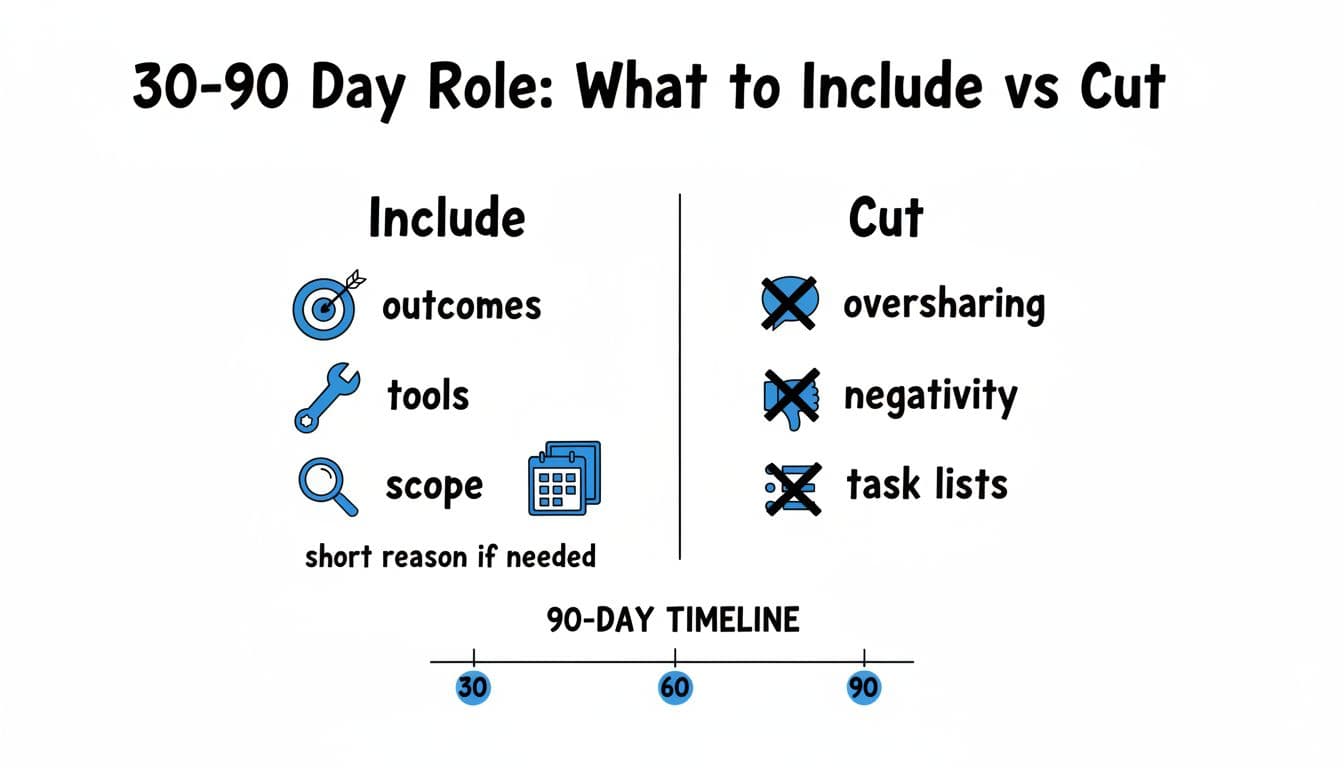
What to include (and what to cut)
Include: measurable goals, outcomes, scope, tools, and a quick clarifier when needed.
Cut: emotional backstory, blame, and long task lists.
A good rule: if a detail wouldn’t help a recruiter place you in the next job, it doesn’t belong.
If you want a deeper look at structuring temp and contract entries so they read like real experience (not filler), this breakdown from Enhancv is useful: how to list temporary work on a resume.
A quick step-by-step to edit the entry (10 minutes)
- Write one line action plan describing the mission of the role (why you were hired).
- Pick 2-3 wins you completed, even small ones, and add numbers.
- Name the tools you used that match the next job (software, methods, systems).
- Delete chores that don’t prove skill (stuff anyone in the seat would do).
- Check the timeline so you’re choosing between resume gaps vs short stints on purpose for your new position, not by accident.
Write bullets that justify the short tenure (without overexplaining)
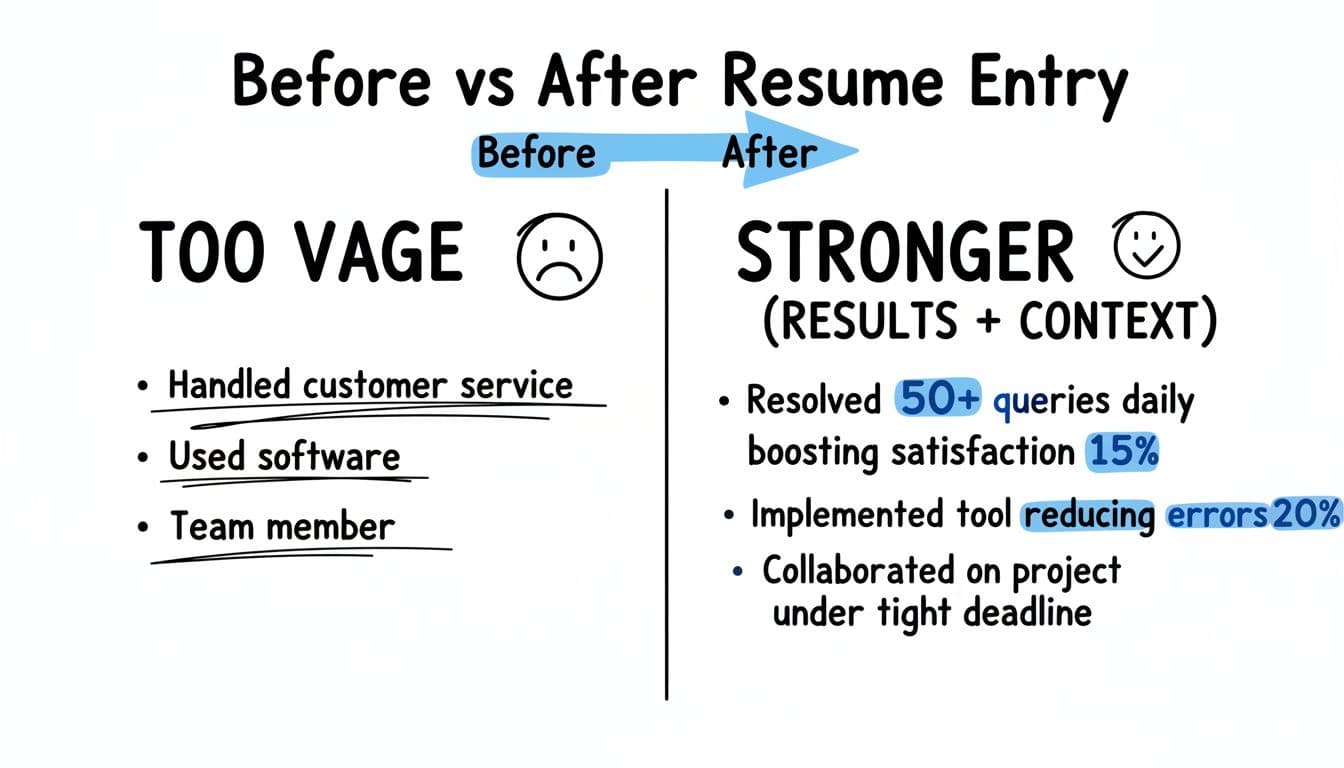
Short roles need dense bullets. Not longer, just stronger. Your bullets should demonstrate measurable impact by answering: “What changed because you were there?”
Use this simple formula, aligned with SMART goals, to write them fast:
Action + Scope + Tool + Result
Example: “Built a weekly report for 12 regional stores in Excel, cutting inventory errors by 18%.”
Good, better, best: sample resume entries for a 30 to 90 day job
Good (honest, but too thin)
Customer Support Associate (Contract) | May 2025 to Jul 2025
- Assisted customers with questions by phone and email
- Used ticketing system to track issues
Better (adds scope, shows competence)
Customer Support Associate (Contract) | May 2025 to Jul 2025
- Resolved 40 to 60 customer tickets per day across billing and account access
- Documented repeat issues in Zendesk to improve internal responses
Best (ties work to outcomes, reduces “why so short?”)
Customer Support Associate (Contract) | May 2025 to Jul 2025
- Cleared a 2-week backlog by resolving 55+ tickets daily, sustaining 95% SLA for urgent requests
- Updated 18 help articles and macros in Zendesk, reducing repeat “how-to” tickets by 12% during the contract period
- Partnered with stakeholders in Ops on payment error triage, speeding up escalations from 2 days to same-day handoff
Notice what’s missing: no drama, no excuses, no “left due to toxic culture” language. By focusing on the contribution phase and impact phase in your bullets, the results do the talking.
If you want help tightening wording for ATS scans, tools like CareerScribeAI’s AI Resume Builder can be useful for turning rough notes into clear, quantified bullets, while keeping your voice.
Explain short employment in a cover letter and interview (calmly, once)
A resume doesn’t need a full explanation. It needs clean facts. If context is necessary, use one short line in a cover letter to assure the hiring manager, then move on.
CareerScribeAI’s Cover Letter Generator can help you write that single line without sounding defensive or stirring up imposter syndrome, especially if you tend to over-explain.
One-line cover letter options (pick one)
- Contract ended: “This was a short contract role that concluded as scheduled, and I’m now seeking a long-term new position in X.”
- Mismatch: “After joining, I realized the new role didn’t match the scope discussed, so I’m focused on opportunities aligned with X.”
- Change at company: “The position ended due to a team restructure, and I’m now targeting new roles focused on X.”
A short interview script (15-20 seconds)
“In a job interview, explain that you joined for a short-term need and hit the ground running after a quick onboarding process. In the first 30 days of the learning phase, you used strategic thinking for an action plan like a 30-60-90 day plan. By the first 60 days, you improved (result) by doing (action). The role ended (brief reason) before the first 90 days. Now, through company research and my professional network, I’m looking for a longer-term new role where I can build on that potential performance.”
Then stop. Let them ask follow-ups.
If you’re unsure what “impact” should sound like in a short window or a job interview, borrow the structure of a 30-60-90 day plan. Frame your onboarding process around the first 30 days for quick wins, the first 90 days for sustained results, and beyond. This reference is a solid refresher: Indeed’s 30-60-90 day plan template. CareerScribeAI’s Interview Prep Tools can also help you rehearse this answer, including for situational interview questions, so it comes out steady in your job interview, not rushed.
Conclusion: Make the short stint small, but make your value loud
A short-term role doesn’t have to poison your story. On a short-term job resume, the winning approach is simple: include the job when it adds trust, format it so it doesn’t dominate the page, and write bullets that show results instead of chores.
Be truthful, be brief, and point your reader to what you want next, such as opportunities with a job description that matches your strengths and a company culture where you can thrive in the first 90 days. If you can do that, even a role cut short before finishing your 30-60-90 day plan becomes a footnote, not a verdict.